
Can Storm Shelters Be Moved in Mississippi?
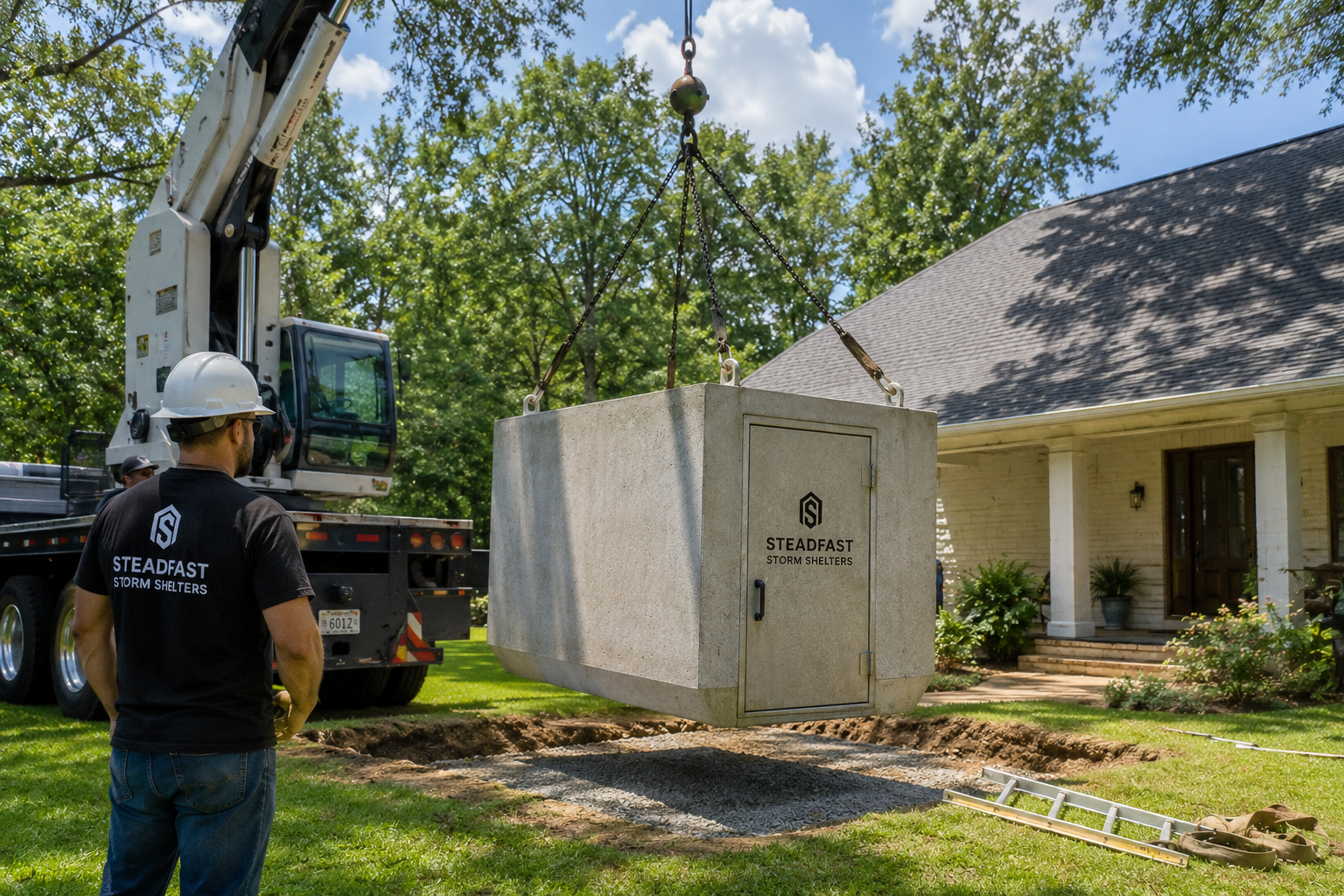
If you're asking can a storm shelter be moved, the answer is sometimes—but it depends on the type of shelter, how it was originally installed, its condition, and the property where it will be relocated.
Some storm shelters can potentially be relocated by qualified professionals using specialized equipment, while others are intended to remain in their original installation location. Before attempting to move any shelter, it's important to have it evaluated by an experienced installer to determine whether relocation is practical and appropriate.
For Mississippi homeowners planning to move, purchase another home, or renovate their property, understanding these factors can help determine whether relocating a shelter or installing a new one makes more sense.
Not Every Storm Shelter Is Designed the Same
Whether a storm shelter can be relocated depends on several factors, including:
- Shelter design
- Installation method
- Anchoring system
- Age of the shelter
- Current condition
- Accessibility for removal equipment
- Conditions at the new installation site
Because every installation is different, there is no universal answer that applies to every shelter.
A professional inspection is usually the best first step.
Common Reasons for Relocating a Storm Shelter
Mississippi homeowners ask about relocating shelters for many reasons.
Some of the most common include:
- Selling a home
- Building a new home
- Major renovations
- Property redevelopment
- Purchasing land elsewhere
- Wanting a different shelter location
- Accessibility improvements
In many situations, homeowners simply want to know whether they can take their investment with them instead of purchasing another shelter.
The New Property Must Also Be Evaluated
Even if a shelter can potentially be moved, the new property must still be suitable for installation.
Professional installers typically evaluate:
- Available installation space
- Drainage
- Soil conditions
- Existing concrete
- Utility locations
- Equipment access
- Overall site layout
These factors influence whether relocation is practical and where the shelter should ultimately be placed.
Concrete Storm Shelters Require Careful Evaluation
Many Mississippi homeowners own concrete storm shelters because of their durability and long service life.
Whether a concrete shelter can be relocated depends on the specific shelter, its installation method, and its condition.
Because concrete shelters are substantial structures, relocation should always be evaluated and performed by experienced professionals using appropriate equipment.
Sometimes Installing a New Shelter Makes More Sense
In some situations, relocating an existing shelter may be practical.
In others, installing a new shelter may offer advantages such as:
- Better placement
- Improved accessibility
- Larger capacity
- Updated design
- Easier installation
- Better fit for the new property
The best decision depends on the overall cost, logistics, and long-term goals for the property.
If you're comparing storm shelter options, it's worth evaluating whether a new installation better meets your family's needs.
Avoid Making Assumptions
Because every shelter and every property are different, homeowners should avoid assuming that a shelter can—or cannot—be relocated.
Instead, ask questions such as:
- Can my current shelter safely be moved?
- Is relocation practical?
- What preparation is required?
- Is my new property suitable?
- Would replacing the shelter be the better investment?
A professional evaluation provides answers specific to your shelter and property rather than relying on general assumptions.
Moving a Shelter Isn't Just About Transportation
Relocating a storm shelter involves much more than simply lifting it onto a trailer.
Before a shelter is moved, installers typically evaluate:
- The shelter's current condition
- How it was originally installed
- Whether it can be removed safely
- Transportation logistics
- The suitability of the new installation site
- Equipment access at both properties
For Mississippi homeowners, relocation often depends as much on the new property as it does on the shelter itself.
A shelter that worked well at one location may require a completely different installation approach after it's moved.
When Is It Better to Install a New Shelter?
Although many homeowners hope to relocate an existing shelter, there are situations where purchasing a new shelter may be the more practical long-term decision.
A new installation may make sense if:
- Your family has grown.
- You want a larger shelter.
- Your new home's layout is significantly different.
- Accessibility needs have changed.
- The existing shelter isn't the ideal size or location.
- Installation costs make relocation less practical.
The goal isn't simply to save the existing shelter—it's to make sure your family has the best protection possible at your new home.
Relocating a Shelter Around Jackson
Homeowners relocating within the Jackson area often ask whether their existing shelter can move with them.
The answer depends on several property-specific factors, including:
- Available installation space
- Driveway and equipment access
- Existing utilities
- Site grading
- Drainage
- Foundation conditions
Every property should be evaluated individually before deciding whether relocation or replacement is the better investment.
If you're moving within central Mississippi, learn more about storm shelters in Jackson.
You can also explore our complete selection of Mississippi storm shelters available throughout the state.
Discuss These Questions With Your Installer
Before making a decision, ask:
- Can my current shelter be relocated safely?
- Is my new property suitable?
- What equipment will be required?
- Will relocation affect future performance?
- Would replacing the shelter provide better long-term value?
- What preparation is required before installation?
These questions help homeowners compare the practical benefits of relocation versus purchasing a new shelter.
The Best Solution Depends on Your Property
Every storm shelter and every property is different.
While some shelters may be candidates for relocation, others may be better left in place with a new shelter installed at the new home.
A professional evaluation gives you the information needed to make the right long-term decision based on your shelter, your property, and your family's needs.
Need Help Deciding Whether to Move Your Shelter?
Whether you're relocating across town or moving across Mississippi, our team can help evaluate your current shelter and recommend the solution that best fits your new property.