
Can Storm Shelters Be Installed Anywhere in Mississippi?
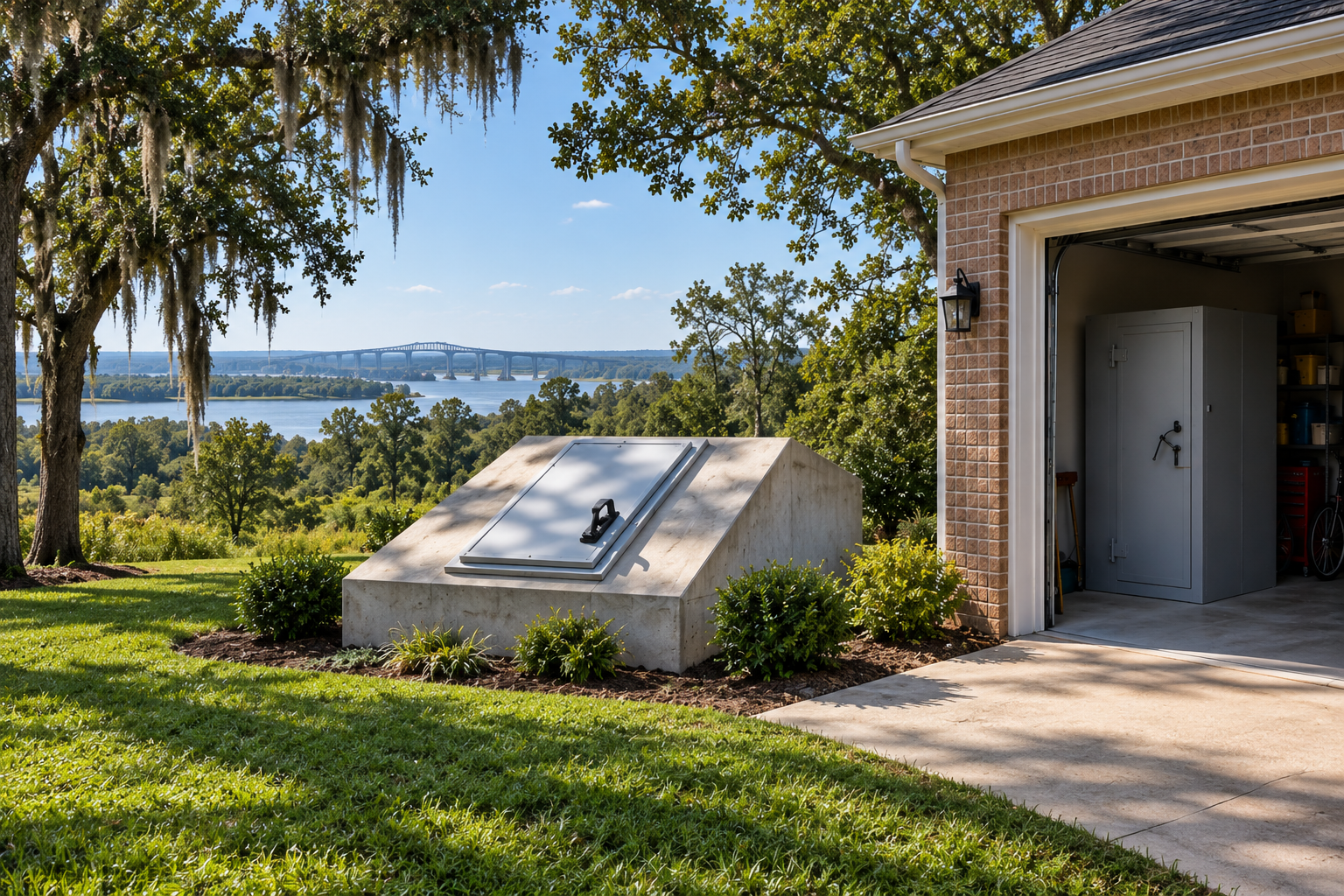
Can Storm Shelters Be Installed Anywhere in Mississippi?
Not literally anywhere — but most Mississippi properties have at least one workable option once you know what actually determines site fit. The question isn't really "can I install a shelter," it's "which shelter type fits what my property can support," and that's a much easier question to answer.
That framing matters because most of the online advice around this question is written generically, without accounting for how differently property conditions can vary across a single state — let alone across the country. Mississippi specifically has enough variation in terrain and flood risk that a generic answer isn't much use.
What Actually Limits Where a Shelter Can Go
Three things drive most placement decisions: available space, what's already running underground or nearby, and how the shelter type interacts with your property's specific conditions. None of these are unique to Mississippi, but the state's mix of coastal, Delta, and hill-country geography means the specific limiting factor tends to vary a lot from one property to the next.
Site Conditions That Matter Most in Mississippi
Near the Gulf Coast, flood zone designations and elevation requirements can affect where and how a shelter is placed, particularly for below-ground options. In the Delta, a high water table and heavy clay soil can make excavation more involved than it looks on paper. Farther inland and into the hill country, the more common limiting factor is simply usable yard space free of septic lines, wells, and established landscaping. Knowing which of these applies to your property is the real starting point — not a generic yes-or-no answer.
Signs Your Property Might Need a Closer Look
- You're within a mile or two of the Gulf Coast or a major waterway
- Your yard tends to hold standing water after a normal rain
- You're not sure where your septic system or well is located relative to where you'd want to place a shelter
- Your property is part of an HOA with rules about exterior structures
What This Means for Coastal vs. Inland Properties
A property near the coast may need to lean toward an above-ground option specifically because of flood zone and elevation considerations, while a property well inland might have underground on the table as a genuine option if the soil and water table cooperate. Neither situation is better or worse — they're just different starting points that point toward different shelter types.
Matching Shelter Type to What Your Site Allows
Once you know your property's limiting factor, matching a shelter type gets a lot simpler: a steel safe room or above-ground concrete shelter for properties where excavation isn't ideal, or an underground option where drainage and elevation genuinely support it. The specifics of what installation involves for each — site prep, delivery, placement — are covered in full in our storm shelter installation instructions, which is worth a look once you have a shelter type in mind.
What a Site Evaluation Actually Looks At
A site evaluation isn't a pass-or-fail inspection — it's a check on the handful of things that actually determine fit: soil composition, water table depth if underground is being considered, proximity to septic lines, wells, or other utilities, and delivery access for equipment. Most of this can be discussed over the phone based on what you already know about your property, with specifics confirmed once you're ready to move forward.
Timing Considerations for Mississippi Properties
Ground conditions shift with the seasons, particularly in the Delta and other clay-heavy areas where the wettest stretches of the year can complicate excavation. If underground is on the table for your property, scheduling around the driest reasonable window can make installation more straightforward. Above-ground options like a safe room or concrete shelter are far less affected by seasonal timing, since there's no excavation to plan around.
What This Means for Your Budget
Site conditions can affect cost — a property that needs more site prep or a different shelter type than originally planned isn't unusual — which is part of why storm shelter financing options exist if spreading the cost out works better once you know what your property actually requires.
What to Confirm Before You Commit
- Whether your property falls within a flood zone or has elevation requirements that affect placement
- Where septic lines, wells, or utilities run near your preferred spot
- Whether your soil and water table genuinely support excavation, if underground is on the table
- Any HOA guidelines that apply to your neighborhood, if relevant
Comparing Your Options in Mississippi
Browse storm shelter options to compare above-ground, steel, and underground shelters side by side, take a look at what's available across Mississippi storm shelters, then Find the best fit so we can confirm what your specific property supports.