
How Tornado Alerts Actually Work in Kentucky
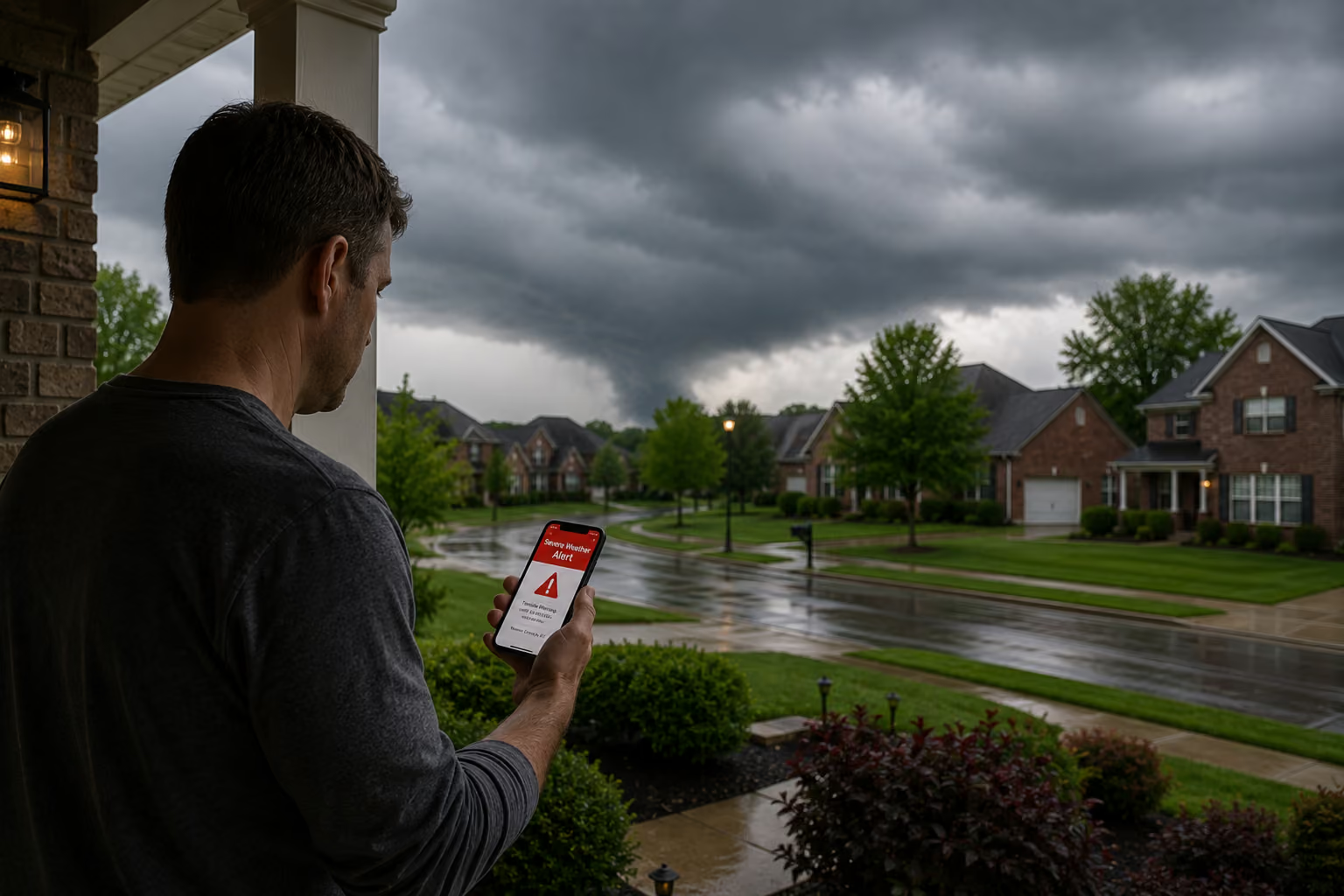
If you've ever wondered how tornado alerts work, the answer is simpler than many people think.
Tornado alerts are generated through a network of weather forecasting, emergency management, and communication systems that notify people when dangerous weather threatens their area. Depending on the type of alert, notifications may be delivered through Wireless Emergency Alerts (WEA), NOAA Weather Radio, weather apps, local television, emergency management systems, and other official sources.
For Kentucky homeowners, understanding how these alerts work helps you respond faster when severe weather develops—and reminds you why relying on just one notification method is never enough.
Who Issues Tornado Alerts?
Most tornado alerts begin with weather monitoring conducted by the National Weather Service (NWS).
Meteorologists continuously evaluate information from:
- Doppler radar
- Weather satellites
- Surface observations
- Storm spotters
- Emergency management reports
- Other weather data sources
When conditions indicate a tornado threat, official alerts may be issued and distributed through multiple communication systems.
These alerts are then shared through weather apps, broadcasters, emergency notifications, and wireless alerts to help warn people as quickly as possible.
Why Does My Phone Alert Me?
Many smartphones receive Wireless Emergency Alerts (WEA).
These government-authorized alerts are designed to notify people in areas where there is an immediate threat to life or safety.
Unlike ordinary text messages:
- they don't require you to subscribe,
- they aren't sent individually,
- and they can reach compatible mobile devices within the affected geographic area.
Because they are location-based, you may receive an alert even if the storm is still several miles away but moving toward your location.
This makes phone alerts one of the most valuable severe weather notification tools available today.
Never Depend on Just One Alert
No single warning system is perfect.
Power outages, dead phone batteries, poor signal coverage, sleeping through notifications, or device settings can all cause someone to miss an alert.
That's why emergency managers recommend using several warning methods together.
A complete warning strategy may include:
- Wireless Emergency Alerts
- NOAA Weather Radio
- Local television coverage
- Trusted weather apps
- County emergency notifications
Many Kentucky homeowners also monitor a live 24-hour tornado tracker during severe weather to follow storms as they move across the region.
Kentucky's Tornado Risk Makes Preparation Important
Kentucky has experienced significant tornado outbreaks in recent years, reminding homeowners that severe weather can occur in every part of the state.
Communities may face:
- spring tornado outbreaks
- overnight tornadoes
- where they'll shelter
- damaging straight-line winds
- severe thunderstorms
- remnants of tropical systems
Receiving an alert is only the beginning.
Families also need to know:
- where they'll shelter,
- how they'll get there,
- and what they'll do once a warning is issued.
For homeowners considering long-term protection, learning about Kentucky storm shelters is an important part of preparing before the next severe weather season.
Common Myths About Tornado Alerts
Understanding how tornado alerts work can help you respond more confidently when severe weather threatens.
Myth: I'll Always Get a Phone Alert
Not necessarily.
Wireless Emergency Alerts are an excellent safety tool, but they are not guaranteed to reach every device in every situation.
Factors such as:
- phone settings,
- battery life,
- cellular connectivity,
- device compatibility,
- or network congestion
may affect whether an alert is received.
That's why emergency managers recommend using several warning methods instead of depending on only one.
Myth: If I Don't Get an Alert, I'm Safe
This is a dangerous assumption.
Technology can fail, and weather conditions can change rapidly.
If severe weather is expected in your area, continue monitoring trusted weather information even if your phone hasn't alerted you.
Multiple warning sources provide the best chance of receiving timely information.
Myth: Tornado Alerts Mean a Tornado Is Already at My House
Not always.
Many alerts are issued before a tornado reaches a community.
The purpose is to provide time for people to prepare and move to safety before conditions become life-threatening.
Responding promptly gives your family the greatest amount of time to reach shelter safely.
Real-Time Weather Tools Improve Situational Awareness
Modern weather technology allows homeowners to monitor changing storm conditions far more effectively than relying on alerts alone.
Many Kentucky families use Storm Mode during severe weather to stay informed as storms develop and warnings change.
Using multiple trusted information sources helps you make better decisions throughout a severe weather event rather than relying on a single notification.
An Alert Gives You Time—Preparation Gives You Protection
A tornado alert is only effective if you already know where you'll go.
Kentucky's history of severe weather reminds homeowners that having a plan before the next warning is just as important as receiving the warning itself.
Whether your shelter is inside your home or elsewhere on your property, planning ahead gives your family the best opportunity to respond quickly when dangerous weather develops.
Use Every Tool Available Before the Next Storm
The best severe weather preparedness combines multiple alert methods with a practiced emergency plan.
Track developing storms, monitor changing conditions, and make sure your household knows exactly what to do before the next tornado warning is issued.