
Best Above-Ground Storm Shelters for Homes in Kentucky
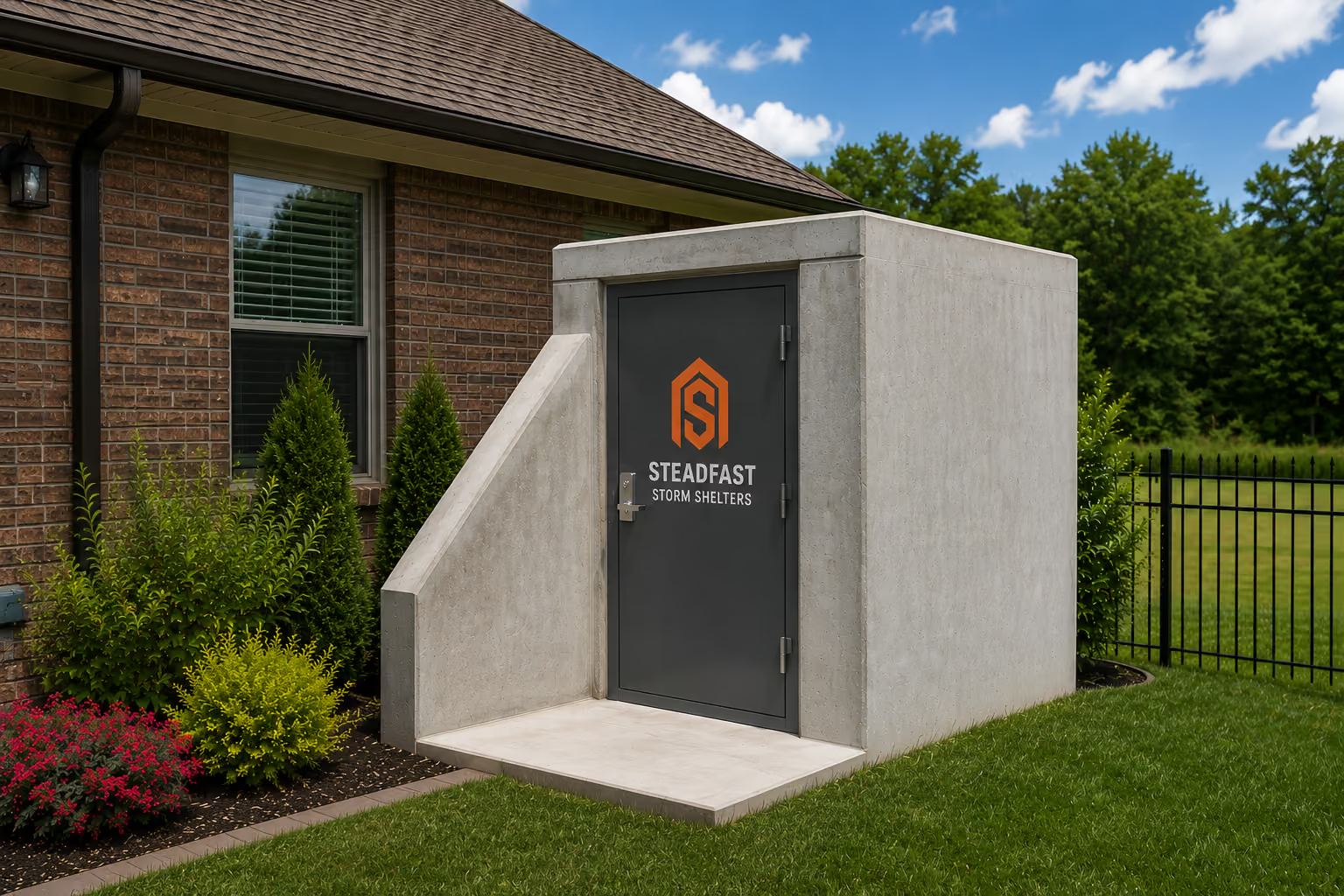
For many Kentucky homeowners, the best above-ground storm shelter is one that combines engineered tornado protection with fast accessibility during real emergencies.
That combination is especially important because many Kentucky homes are built on slab foundations or crawlspaces without basements. During a tornado warning, families often have only minutes to react, making quick access just as important as structural protection.
Modern above-ground storm shelters have become increasingly popular because they eliminate the need to travel outside to an underground shelter or climb down stairs while severe weather is already occurring. For many families—including those with young children, older adults, or mobility limitations—an above-ground shelter provides a practical balance of safety and convenience.
The best shelter for your home ultimately depends on:
- your property layout
- where the shelter can be installed
- family accessibility needs
- available space
- how quickly everyone can reach protection during an emergency
Rather than asking which shelter is "the strongest," most Kentucky homeowners should ask:
"Which shelter can my family realistically reach in less than a minute during a tornado warning?"
That question usually leads to a much better buying decision.
Why More Kentucky Homeowners Are Choosing Above-Ground Storm Shelters
Years ago, many people assumed underground shelters were automatically the safest option.
Today's engineered above-ground shelters have changed that conversation.
Properly engineered shelters built to recognized performance standards provide life-safety protection while offering several practical advantages that many homeowners now prioritize.
For many Kentucky families, above-ground shelters offer:
- faster access during tornado warnings
- easier entry for elderly family members
- no stairs or ladders
- protection without walking across the yard
- easier access during heavy rain or nighttime storms
- installation in or near the garage
- convenient day-to-day accessibility
These real-world advantages explain why above-ground shelters continue gaining popularity across Kentucky.
Kentucky's tornado risk isn't limited to one part of the state. Communities from Bowling Green and Hopkinsville to Mayfield, Owensboro, and areas surrounding Lexington have all experienced significant tornado activity over the years. While every property is different, many newer homes across Kentucky are built on slab foundations or crawlspaces rather than full basements, making above-ground shelter solutions an increasingly practical choice for many homeowners.
Homeowners comparing Kentucky storm shelters often discover that convenience during an actual emergency is one of the biggest deciding factors.
Features to Look for Before Buying
Not every shelter is designed the same way.
Instead of comparing products based only on price, Kentucky homeowners should evaluate the overall installation and how the shelter will function during a real emergency.
Important considerations include:
Fast Accessibility
Can every member of your household reach the shelter quickly?
Think about:
- young children
- elderly family members
- pets
- mobility limitations
- nighttime access
A shelter that is technically strong but difficult to reach may not be the best solution for your family.
Installation Location
Many homeowners choose garage installations because they allow indoor access without leaving the house during severe weather.
Others may prefer an outdoor installation depending on:
- available space
- driveway layout
- garage size
- property design
The installation location should balance accessibility with practicality.
Capacity
Choose a shelter sized for your household.
Consider:
- current family size
- future needs
- emergency supplies
- pets
Overcrowding during severe weather creates unnecessary stress.
Engineering and Construction
A properly engineered shelter should be designed specifically for tornado protection—not simply heavy steel or reinforced concrete.
Many Kentucky homeowners compare concrete storm shelters because they offer durable construction and long-term protection while fitting a variety of residential properties.
The engineering behind the shelter matters more than appearance alone.
How to Choose the Right Above-Ground Shelter for Your Home
The best above-ground storm shelter isn't necessarily the biggest or the most expensive.
It's the shelter that best matches your property, your family, and how you would actually respond during a tornado warning.

Garage-Installed Shelters
Garage installations have become one of the most popular choices for Kentucky homeowners.
Advantages include:
- protection without stepping outside
- faster nighttime access
- convenient daily accessibility
- easier entry for elderly family members
- protection during heavy rain and hail
For many homeowners, a garage-installed above ground tornado shelter removes several obstacles that could slow emergency response.

Outdoor Above-Ground Shelters
Outdoor installations remain an excellent option for many properties.
These shelters often work well when:
- garage space is limited
- detached buildings are available
- the property has adequate installation space
- homeowners prefer exterior placement
Outdoor shelters should still be positioned where they remain easy to reach during severe weather.
Walking long distances across a yard during a tornado warning is rarely ideal.

Family Accessibility
One of the biggest advantages of an above ground shelter for home use is accessibility.
Families should think beyond storm ratings and ask practical questions such as:
- Can children reach the shelter quickly?
- Can grandparents enter without difficulty?
- Will pets fit comfortably?
- Can everyone enter within seconds?
These questions often matter more during a real emergency than minor differences in product specifications.
Which Above-Ground Shelter Fits Your Property?
While every installation is different, this general comparison can help homeowners narrow down their options.
Every property should be evaluated individually, but thinking through how your family would actually reach the shelter during a tornado warning is often more important than comparing specifications alone.
What Kentucky Homeowners Should Evaluate Before Buying
Every property is different.
Before purchasing an above-ground shelter, homeowners should evaluate:
Available Installation Space
Look at:
- garage dimensions
- driveway layout
- yard access
- concrete surfaces
- equipment access
Proper installation begins with choosing the right location.
Accessibility During Severe Weather
Imagine receiving a tornado warning at 2:00 AM.
Ask yourself:
- Which route would your family take?
- Is that path well lit?
- Does anyone need mobility assistance?
- Would heavy rain change the situation?
Thinking through these scenarios often helps identify the best placement.
Picture a Real Tornado Warning
Imagine it's 1:45 in the morning.
A tornado warning wakes your family. Heavy rain is pounding the roof, the power has gone out, and your children are asleep upstairs.
In that moment, every extra step matters.
Walking across a dark yard to reach an outdoor shelter may be the right solution for some properties. For others, stepping directly into a garage-installed above-ground shelter may provide faster, easier access under stressful conditions.
Thinking through those real-life scenarios before purchasing a shelter often leads to a better long-term decision than comparing products based only on price or appearance.
Long-Term Convenience
The easier a shelter is to access, the more likely your family will use it immediately when severe weather develops.
Convenience is not just a comfort feature.
It can become a safety advantage.
Finding the Right Above-Ground Shelter for Your Kentucky Home
No reputable storm shelter company should recommend the exact same shelter for every homeowner.
A family living in a newer subdivision outside Bowling Green may have very different installation options than someone on several rural acres outside Paducah or Hopkinsville.
The best above-ground storm shelter depends on:
- your home's layout
- available installation space
- accessibility during emergencies
- family size
- mobility needs
- how quickly everyone can reach protection
That is why comparing shelters based on your property—not just product specifications—is one of the smartest steps you can take before buying.
Steadfast Storm Shelters helps homeowners compare concrete storm shelters based on their property layout and long-term protection goals.
Homeowners can also compare all storm shelter options to determine which shelter type best fits their home.
Families in South Central Kentucky who are beginning their research may also find it helpful to review storm shelters in Bowling Green to better understand local installation options and service availability.
How to Narrow Down the Best Above-Ground Shelter
Before making a purchase, Kentucky homeowners should compare:
- installation location
- family accessibility
- garage compatibility
- available space
- emergency response time
- long-term usability
- shelter capacity
The best above-ground storm shelter is usually the one your family can reach quickly, comfortably, and confidently when every second matters.
Find the Best Fit for Your Home
Compare above-ground storm shelter options designed for Kentucky homes and receive recommendations based on your property, installation goals, and family needs.