
Bowling Green, KY Tornado History
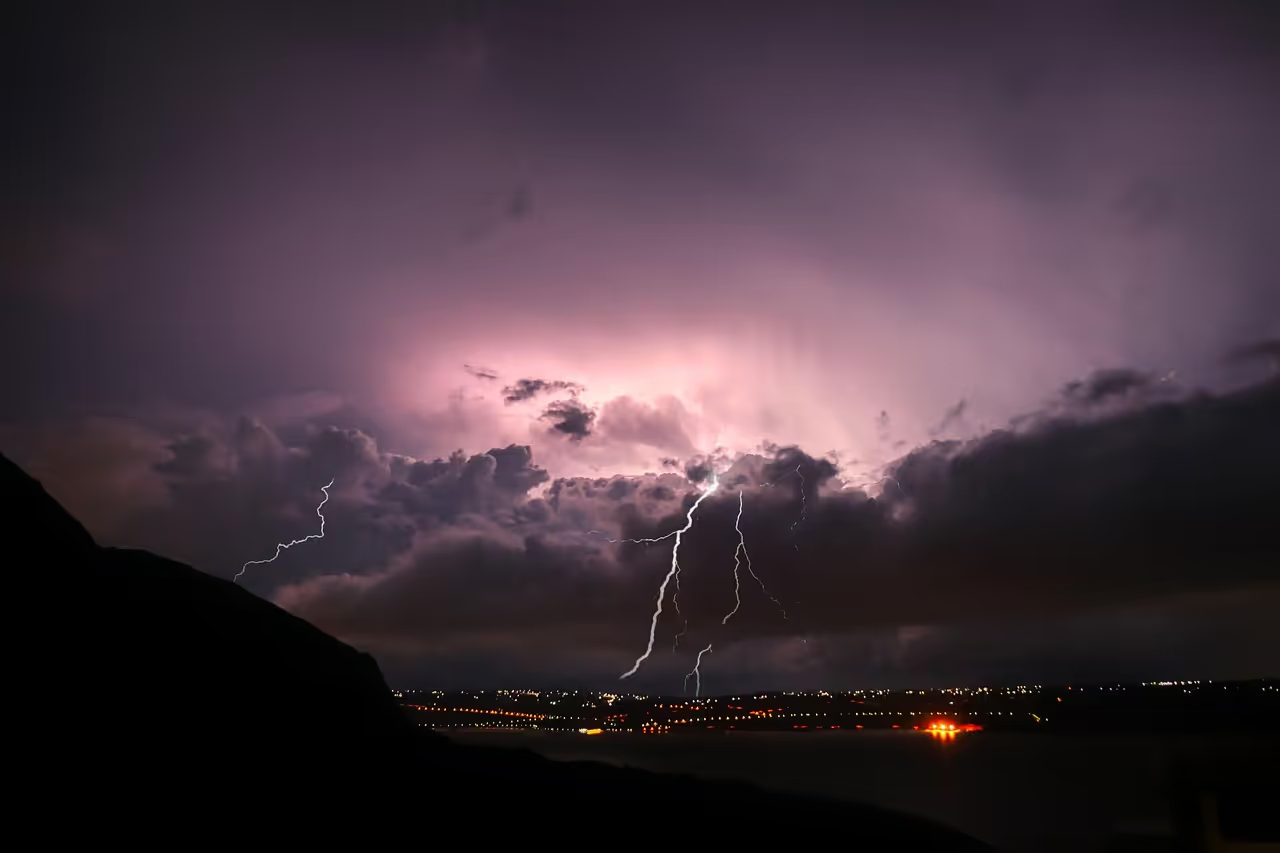
Overview of Tornado Activity in Bowling Green, Kentucky
Bowling Green is located in south-central Kentucky, an area that periodically experiences severe weather conditions capable of producing tornadoes. The region sits within a broader zone of the United States where atmospheric conditions—such as warm, moisture-rich air from the Gulf of Mexico interacting with colder air masses from the north—can lead to strong thunderstorms and rotating storm systems.
While tornadoes can occur at any time of the year, the most active period for tornado activity in the Bowling Green area typically occurs during the spring months. Seasonal weather patterns during this time often create the unstable atmospheric conditions that support severe storm development.
Confirmed Tornadoes Near Bowling Green, Kentucky
According to records maintained by the NOAA Storm Events Database, numerous tornadoes have been documented in Warren County and surrounding counties since digital recordkeeping became more standardized in the early 1990s.
These confirmed tornado events represent storms that were officially surveyed and verified by meteorologists after damage assessments and field investigations. Tornado counts reflect events that met established classification criteria at the time of documentation.
Earlier decades may show fewer recorded tornadoes because storm detection technology and reporting practices were more limited before modern radar systems and coordinated survey methods became widely used.
Tornado Warnings Issued for the Bowling Green Area
Tornado warnings affecting Bowling Green are issued by the National Weather Service when meteorologists detect atmospheric conditions that indicate a possible or developing tornado.
Warnings may be triggered through Doppler radar signatures showing rotation within storms, reports from trained storm spotters, or other real-time weather observations.
Over the past two decades, numerous tornado warnings have been issued for Warren County and surrounding areas. Warning totals are generally higher than confirmed tornado counts because warnings are issued as precautionary alerts when storm conditions suggest a tornado could develop.
Receiving a tornado warning does not necessarily mean a tornado has touched down. Many warnings are issued to provide advance notice so residents can take protective action if severe weather intensifies.
Tornado and Warning Trends Over Time in Bowling Green
Historical tornado data for Bowling Green and the surrounding region shows that both tornado documentation and warning practices have evolved as weather monitoring technology has improved.
- 1990s: Tornado reports relied heavily on ground surveys and post-storm damage assessments, with limited radar-based detection tools available.
- 2000s: The expansion of Doppler radar networks significantly improved meteorologists’ ability to identify rotating storms and issue earlier tornado warnings.
- 2010s: Advances in radar resolution, improved communication systems, and better coordination between weather agencies led to more consistent tornado confirmations and faster warning dissemination.
- 2020s: Continued advancements in digital reporting systems, radar analysis tools, and survey methods have enhanced the way tornado events and warnings are documented across Kentucky.
Changes in warning frequency over time often reflect improvements in storm detection and reporting rather than a direct increase in the number of tornadoes occurring.
Tornado History in Major Kentucky Cities
The following cities across Kentucky have dedicated pages providing additional localized information related to severe weather preparedness and storm shelter resources. Tornado history data is typically recorded at the county level rather than by exact city boundaries.
How to Interpret Tornado History Data
When reviewing tornado history information for Bowling Green and the surrounding region, it is helpful to keep several important factors in mind:
- Tornado events are commonly recorded at the county level, rather than by individual city boundaries.
- Confirmation accuracy may be influenced by damage visibility, survey access, and population density.
- Historical storm records may be updated or revised as new assessments or data become available.
- Tornado warnings represent risk-based alerts, not confirmed tornado touchdowns.
- Detection technologies and reporting practices have improved significantly over time.
Because of these factors, tornado history data should be viewed as an informed historical reference rather than a complete record of every tornado event that may have occurred.
Related Tornado Tools
Frequently Asked Questions