
Tennessee Tornado Season
When Tennessee Tornado Season Begins and Why Timing Matters
Tennessee Tornado Season does not follow a simple start-and-stop calendar. While many people associate tornadoes with spring, the reality is more complex. Tennessee experiences multiple severe weather peaks each year, making preparation a year-round priority.
So, when is tornado season in TN?
Historically, the most active months are March, April, and May. However, a secondary peak often develops in November, bringing another wave of potentially dangerous storms.
This extended pattern is why tornado season Tennessee residents face can feel unpredictable. Unlike states in the Great Plains with more defined seasonal windows, Tennessee’s position in the Southeast exposes it to multiple storm systems throughout the year.
Adding to the risk, many tornadoes in Tennessee occur at night. Limited visibility and sleeping households reduce reaction time when a tornado warning Tennessee alert is issued.
Understanding Tennessee Tornado Season timing allows families to prepare before severe weather develops.
Does Tennessee Get a Lot of Tornadoes?
Many homeowners ask:
- Does Tennessee get a lot of tornadoes?
- How often does Tennessee get tornadoes?
- Is Tennessee in Tornado Alley?
Tennessee is not part of traditional “Tornado Alley,” which includes states like Oklahoma and Kansas. However, meteorologists often refer to the Southeast as “Dixie Alley,” a region that experiences frequent and sometimes more dangerous tornadoes due to population density and nighttime storm patterns.
Tornadoes in Tennessee occur regularly each year. The state averages dozens of tornado reports annually, with stronger events possible during peak storm systems.
Because many storms are rain-wrapped, they can be difficult to see, increasing reliance on alerts rather than visual confirmation.
When Is Tornado Season in Nashville?
When is tornado season in Nashville specifically?
Middle Tennessee, including Nashville, typically sees its highest activity between March and May, with November as a secondary spike.
Urban density increases risk exposure, which makes preparation especially important for homeowners in the Nashville metro area.
Tracking a Tennessee tornado map from previous outbreaks shows that Middle Tennessee frequently experiences severe storm paths during major weather systems.
What to Expect During Tennessee Tornado Season
Tennessee Tornado Season typically includes:
- Strong thunderstorms fueled by Gulf moisture
- Supercell storms capable of producing long-track tornadoes
- Rapidly shifting weather conditions
- Large hail and damaging straight-line winds
- Overnight severe weather events
Unlike hurricanes, tornadoes provide limited warning time. Watches may be issued hours in advance, but warnings often allow only minutes to respond.
Understanding the difference between alerts is critical. If you are unsure, review the breakdown of tornado watch vs warning so you can act immediately when needed.
How to Prepare Before Tennessee Tornado Season Peaks
Preparation should happen before storms develop.
Step 1: Monitor Seasonal Weather Trends
Purpose: Early awareness improves response readiness.
As early as late winter, begin monitoring forecasts. Severe weather can develop quickly once warm, moist air moves northward.
Sign up for emergency alerts and keep multiple warning methods available, including phone notifications and NOAA weather radios.
Step 2: Install a Certified Storm Shelter
Purpose: Structural protection determines survival.
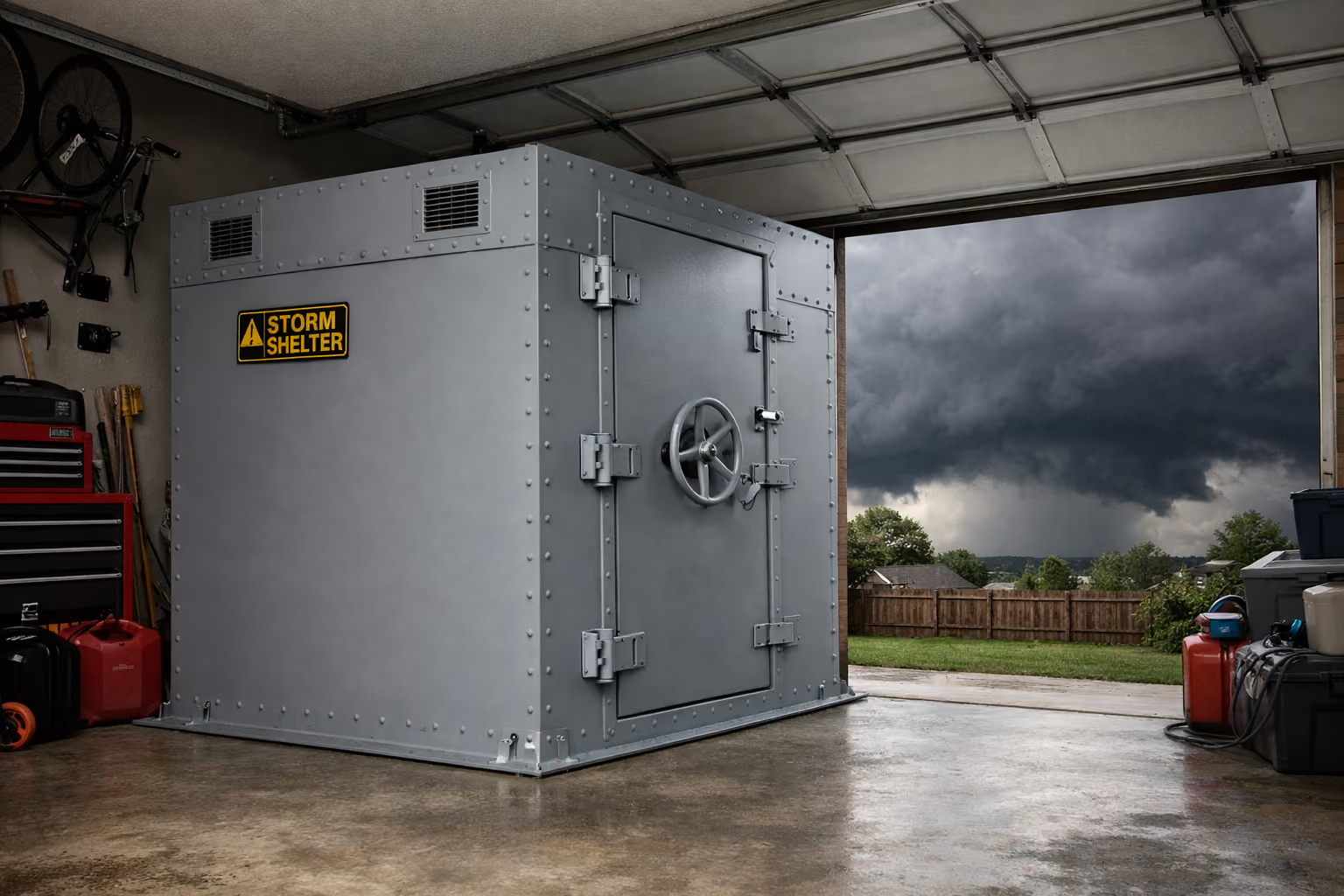
During Tennessee Tornado Season, the safest place is a certified storm shelter or reinforced safe room.
Interior closets or hallways provide limited protection. Professionally installed shelters are engineered to withstand extreme wind speeds and flying debris.
Solutions like those featured on Steadfast Storm Shelters meet FEMA and ICC-500 standards and are designed for EF-5 wind resistance.
If you are evaluating installation, review the FEMA storm shelter installation guide to understand structural requirements and compliance standards.
Step 3: Prepare an Emergency Supply Kit
Purpose: Maintain safety during outages.
Store supplies inside your shelter, including:
- Bottled water (one gallon per person per day)
- Non-perishable food
- Flashlights and batteries
- First aid kit
- Prescription medications
- Phone chargers and backup batteries
- Important documents in waterproof containers
Severe storms often lead to extended power outages.
Step 4: Secure Your Property
Purpose: Reduce debris hazards.
Before tornado season Tennessee storms intensify:
- Trim weak tree branches
- Secure outdoor furniture
- Reinforce garage doors if possible
- Inspect roofing and siding
Reducing loose debris decreases secondary damage risks.
Step 5: Practice Family Tornado Drills
Purpose: Eliminate hesitation during warnings.
Conduct drills before spring and fall peak periods. Ensure everyone knows:
- Where the shelter is located
- How to access it quickly at night
- Who assists children, elderly family members, or pets
Nighttime tornadoes in Tennessee are common. Practicing improves speed and confidence.
Real-World Tennessee Tornado Season Scenarios
Spring Outbreak in Middle Tennessee
A strong April system produces supercells across the region. A tornado warning Tennessee alert is issued at 1:00 AM.
A prepared family moves immediately into their reinforced shelter, avoiding structural debris hazards.
Fall Tornado Event in November
A late-year cold front triggers severe storms. Because the homeowner prepared earlier in the year, emergency supplies are already stocked and ready.
Preparation made months before Tennessee Tornado Season peaks directly improves safety outcomes.
Neighboring State Risk Awareness
Severe systems often affect surrounding states such as Mississippi. If you have family in neighboring areas, review service and protection options in regions like Mississippi service areas to ensure they are also protected.
Common Mistakes During Tennessee Tornado Season
Avoid these critical errors:
- Assuming tornadoes only happen in spring
- Waiting for visual confirmation
- Ignoring tornado watches
- Relying solely on interior rooms
- Delaying shelter installation until peak months
Preparedness should happen before warnings are issued.
Why Reinforced Protection Matters
Tennessee Tornado Season has produced long-track, high-intensity tornadoes capable of devastating damage.
While weather cannot be prevented, structural protection can dramatically improve survival odds.
Reinforced shelters provide:
- Impact-resistant steel construction
- Protection from flying debris
- Anchored stability during extreme winds
- Peace of mind during nighttime events
Interior rooms offer limited protection compared to engineered storm shelters.
When severe weather develops, reaction time is measured in minutes. Preparation must happen in advance.
Frequently Asked Questions
When is tornado season in TN?
Tennessee Tornado Season typically begins in March, peaks in April and May, and often sees a secondary peak in November.
How often does Tennessee get tornadoes?
Tennessee experiences tornadoes every year, with activity varying based on weather patterns.
Is Tennessee in Tornado Alley?
No, but it is often considered part of “Dixie Alley,” a region in the Southeast with frequent severe weather.
When is tornado season in Nashville?
Nashville’s peak tornado activity typically occurs in spring and late fall.
What should I do during a tornado warning Tennessee alert?
Move immediately to a certified storm shelter or reinforced safe room. If unavailable, go to an interior room on the lowest level, away from windows.
Final Thoughts on Tennessee Tornado Season
Tennessee Tornado Season is unpredictable and can extend beyond traditional spring months. Because many storms occur at night and with limited visibility, preparation cannot wait.
Understanding seasonal patterns, monitoring alerts, securing property, and investing in reinforced shelter solutions significantly improves safety.
When severe weather strikes, preparation is the difference between uncertainty and confidence.