
Above-Ground Concrete Shelter Benefits in Tennessee
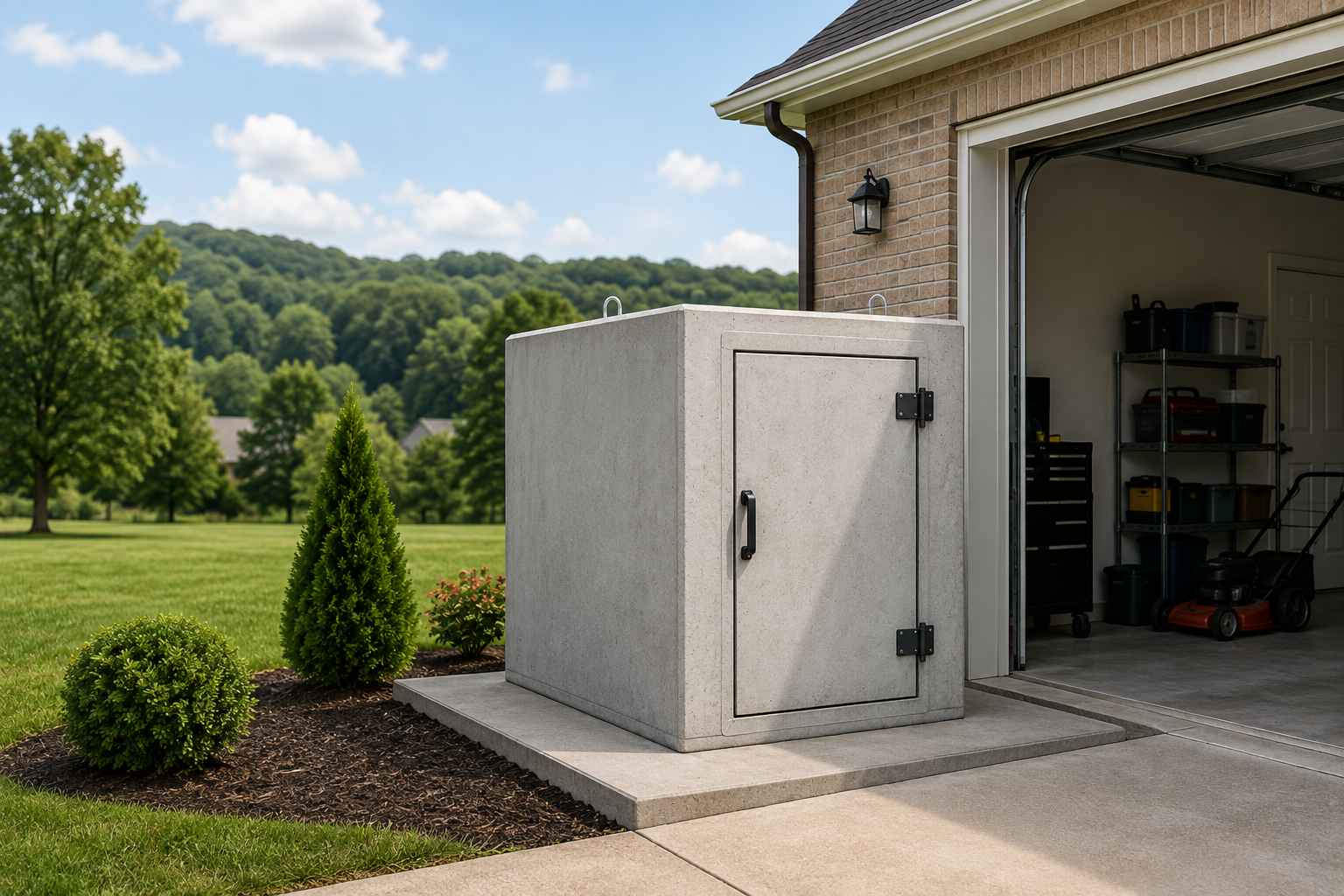
An above-ground concrete storm shelter gives Tennessee homeowners a durable, low-maintenance way to protect their family without excavating a slab, fighting groundwater, or climbing down into a below-ground unit. For a lot of properties across the state, that combination — real protection with ground-level access — is exactly why this shelter type gets picked over the alternatives.
Why Above-Ground Concrete Fits So Many Tennessee Properties
Tennessee isn't flat, uniform ground. Between the rolling terrain of Middle Tennessee, the rockier subsoil found in parts of East Tennessee, and the number of homes built on a slab rather than a full basement, excavation isn't always the simple, low-cost option it might be elsewhere. An above-ground concrete shelter sidesteps most of that. It's installed on or beside an existing slab, garage floor, or dedicated pad, rather than requiring a full dig-out.
Concrete also holds up well against the humidity Tennessee sees for a good part of the year. There's no groundwater to manage and no below-grade moisture to plan around, which is part of why it stays a low-maintenance option long after installation.
It's not just older, rural properties where this matters. Newer subdivisions across the state often come with smaller lots, utility easements, and drainage requirements that weren't designed with excavation in mind. An above-ground option removes those variables from the decision entirely — you're not fighting a buried utility line or a drainage plan to get protection installed.
Who an Above-Ground Concrete Shelter Makes the Most Sense For
This shelter type tends to be the right call for a specific set of situations rather than every property. It's worth considering if:
- Your home sits on a slab foundation with no basement to retreat to during severe weather
- Someone in your household would struggle with stairs during an emergency — older family members, young kids, or anyone with mobility limitations
- Your yard has easements, drainage issues, or tight clearances that make digging impractical
- You want protection added without disturbing your existing landscaping, driveway, or foundation
- You'd rather be able to reach shelter quickly from most points in the house than store extra square footage underground
Key Benefits of an Above-Ground Concrete Storm Shelter
- Ground-level entry — no stairs down into a below-ground unit, which matters if you have older family members, young kids, or anyone with mobility limitations at home
- Reinforced concrete construction built to hold up outdoors for decades with minimal upkeep
- No pumping, no drainage planning, and no groundwater intrusion to manage over time
- Doesn't require altering your existing slab or foundation
- Can typically be placed in a garage, on a carport pad, or on a dedicated exterior pad depending on how your property is laid out
- Stays usable year-round without the freeze-thaw or moisture concerns that can come with some buried installations
- Easy to check on and restock with supplies routinely, not just scramble to reach during a storm
What Living With an Above-Ground Shelter Looks Like
Most of the decision comes down to where it goes. A garage or carport placement keeps it out of the weather and close to where people already park and move through the property. A dedicated exterior pad works well when garage space is tight or already in use for parking and storage. Either way, homeowners generally choose a spot that's a short, direct walk from the main living areas — the goal is to be able to get everyone inside quickly without a lot of thinking involved once a warning is issued.
Because there are no stairs or below-ground access to manage, most households find it just as easy to keep a flashlight, water, and a basic emergency kit inside as it is to check on the shelter itself, which is harder to keep up with consistently on a below-ground unit.
What to Weigh Before You Choose
Above-ground concrete isn't the only option for Tennessee properties — a steel safe room can make sense depending on where you want it placed and what your garage or yard allows. If garage space is limited but you have room outside, concrete tends to be the more practical direction. If you'd rather keep everything inside the garage itself, a steel safe room is worth a look instead. The right fit really comes down to your available space, delivery access, and what your household needs. That's the reason a real conversation about your property beats guessing from a product page: it confirms placement, equipment access, and pricing before anything is ordered.
Where These Shelters Typically Go on a Tennessee Property
Placement usually falls into one of three patterns. In an attached garage, it sits along a wall or in a corner without eating into parking space if the garage has room to spare. On a carport, it goes on the existing slab or a small dedicated pad next to it. And on properties with a detached garage or shop — common on larger lots and in more rural parts of the state — it often makes sense to place it there instead, especially if that structure is closer to where people spend time outdoors. None of these require rerouting utilities or reworking your driveway; the shelter is sized and placed to work with what's already there.
Landscaping around it is mostly a cosmetic choice rather than a functional one. Plenty of homeowners leave it as-is near a garage, while others add simple plantings or a small path if it sits out in the yard. Either way, it doesn't require special site prep beyond a stable, accessible surface.
Finding the Right Fit for Your Tennessee Property
Whether you're near Nashville, out toward storm shelters in Murfreesboro, or elsewhere in the state, delivery and installation arrangements can vary by product and location. The best next step is to request a quote so we can confirm what's available for your address.
Take a look at concrete storm shelters to see the above-ground concrete line in more detail, or browse all storm shelter options if you're still deciding between above-ground, steel, or underground. You can also see the full picture of Tennessee storm shelters we support statewide.
Ready to see what fits your property? Find the best fit and we'll help you compare options based on your home, not a generic checklist.