
Storm Shelters in Michigan’s Thumb Region
The Thumb’s small towns, rural residences, larger lots, open agricultural properties, and longer distances between public resources make on-property access a central planning question. Wells, septic systems, field drainage, utilities, long driveways, equipment routes, snow, and commercial-agricultural occupancy can all affect shelter placement.

Compare Storm Shelter Options in Michigan’s Thumb Region
Thumb Region properties may offer more physical space than a dense metro lot, but installation still depends on the route to the site and what lies beneath it. A safe room can keep access close to the home or garage, while an underground shelter may work where drainage, groundwater, utilities, wells, septic systems, grading, and excavation access have been reviewed.
Commercial shelters for farms, agricultural operations, schools, churches, municipal properties, and community facilities require planning around family members, employees, students, visitors, occupancy, shift or seasonal patterns, and facility access.
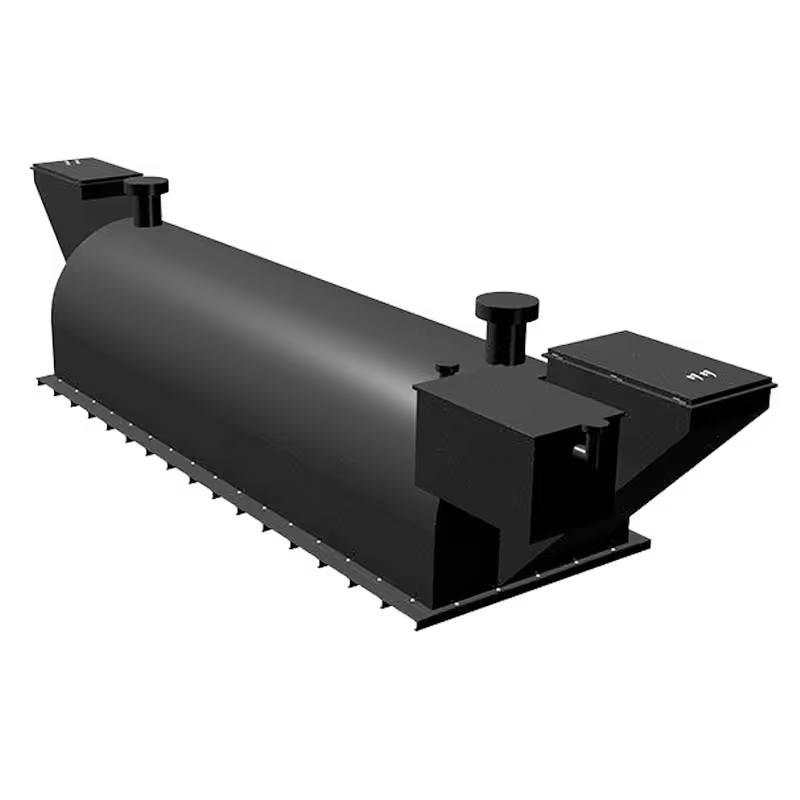
Commercial
Product specifications, capacity, engineering documentation, delivery, and installation requirements vary by project and are confirmed during the quote process.
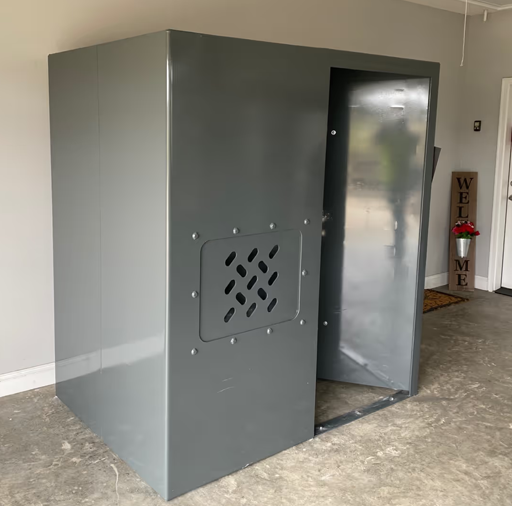
Safe Rooms
Placement is confirmed only after the existing slab, door swing, clearances, access path, product requirements, and installation requirements have been reviewed.
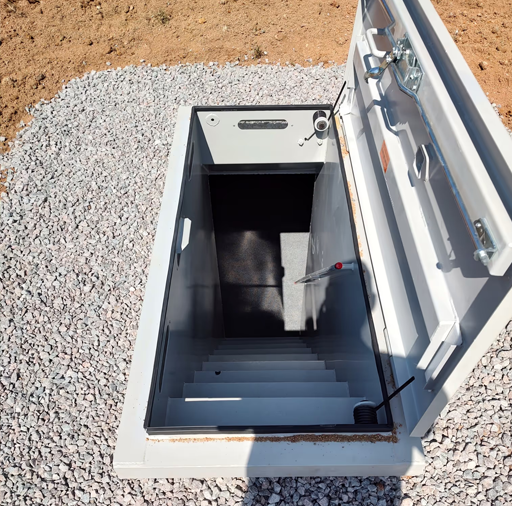
Underground Storm Shelters
Underground placement is never assumed from lot size alone. The quote process must confirm site access, seasonal water conditions, product availability, delivery, and installation coordination for the proposed location.
The Thumb Region Requires Rural and Agricultural Shelter Planning
Michigan’s Thumb Region is characterized by agricultural communities, rural residences, small towns, larger properties, schools, churches, community facilities, and commercial agriculture. Distances between homes, workplaces, and public resources can be greater than in the state’s major metro areas.
Larger lots may create more placement choices, but they also require a closer look at long driveways, field or yard drainage, groundwater, wells, septic systems, buried utilities, soft ground, gates, overhead lines, and the path available to delivery or excavation equipment.
Lapeer is the only direct Thumb-assigned city in the current 40-city Michigan plan. Other Thumb inquiries may be reviewed through the quote process, but the page must not invent city links or imply that unapproved city pages exist.
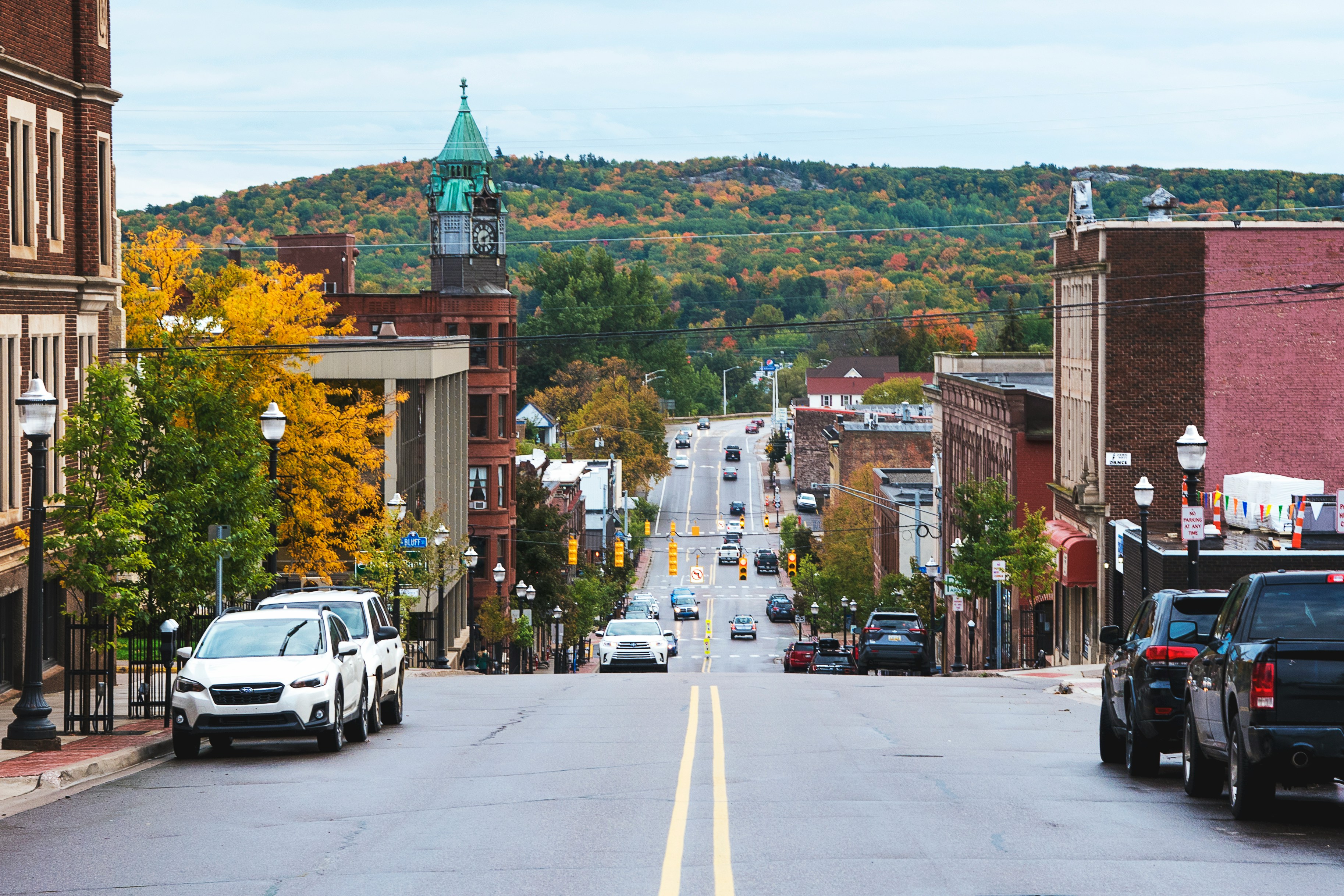
Why On-Property Storm Protection Matters in the Thumb
Severe thunderstorms and tornado-producing storms can affect people at home, in farm operations, at school, in worship facilities, or across workplaces spread over rural properties. Traveling to a public shelter after a warning begins may not be practical when communities and resources are separated by longer distances.
A dedicated shelter creates one known destination for family members, employees, students, visitors, or congregations. The access plan should account for children, older adults, mobility limitations, outdoor workers, multiple buildings, and the time needed to move from the farthest regularly occupied area.
Basements may be part of some household plans, but they are not automatically engineered storm shelters. Structural design, windows, walkout exposure, stairs, access, and the way the lower level is used should be considered when comparing a purpose-built option.
- On-property access reduces dependence on a distant public destination.
- Farm and agricultural operations may need a plan for both family and workforce protection.
- Schools, churches, and community facilities need clear occupant movement routes.
- A defined shelter location can connect multiple buildings or work areas to one emergency plan.
Thumb Region Installation Considerations for Rural Properties
Shelter placement is confirmed only after the proposed address and access route have been reviewed. The following conditions should guide the initial conversation and quote intake.
- Long driveway and equipment access — Confirm road width, gates, culverts, overhead lines, soft shoulders, turnaround room, and the route from the public road to the proposed location.
- Wells, septic systems, and utilities — Rural properties may have private systems or buried services that affect excavation and placement. Their locations must be identified before a below-ground site is approved.
- Field and yard drainage — Open land can still hold seasonal water. Grading, drainage patterns, groundwater, low areas, and soil conditions should be reviewed for underground placement.
- Farm and workforce movement — Agricultural operations should identify where family members and employees are normally located, how they receive warnings, and how they reach the shelter from barns, shops, offices, or outdoor work areas.
- Snow and freeze-thaw — Keep the shelter route accessible around plowing, snow storage, muddy seasons, surface movement, doors, and exterior access points.
Discuss a Storm Shelter for Your Thumb Region Property
Share the address, property type, driveway and equipment access, proposed location, and whether the shelter is for a household, farm, school, church, business, or community facility. We will help compare the approved options and confirm whether delivery and installation coordination are available for the project.

Why Thumb Region Customers Work With Steadfast
Steadfast helps rural and agricultural customers compare shelter access, placement, and use without assuming that a large lot automatically makes every product practical. The site, route, occupants, and operating environment drive the recommendation.
Delivery and installation arrangements vary by product and location and may be coordinated through an approved manufacturer or installation partner. Coverage and scheduling are confirmed during the quote process, not promised from a regional page.
- Guidance for rural homes, farms, agricultural businesses, and community properties
- Safe room, underground, and commercial shelter pathways
- Practical review of private utilities, drainage, driveways, and equipment routes
- Clear coverage confirmation through the quote process
- No invented city pages, local crews, offices, or placeholder offerings
Storm and Public-Shelter Resources for the Thumb Region
Use these tools before severe weather to review current activity and identify public shelter information. Rural distance and operating hours can affect access, so confirm any public destination ahead of time and maintain a separate household or facility plan.
- Open Storm Mode — Quick access to severe-weather planning resources.
- View the 24-Hour Tornado Tracker — Recent tornado and warning activity in one view.
- Check the Public Tornado Shelter Locator — Public shelter information to verify before an emergency.
Frequently Asked Questions About Storm Shelters in Michigan’s Thumb Region
Use the complete crawlable questions and answers below. Part 6 repeats the same content as a developer extraction block for schema matching.
Localized answer angle: Approved product set
Localized answer angle: Coverage honesty and architecture limit
Localized answer angle: Farm and rural access
Localized answer angle: Private systems and rural equipment access
Localized answer angle: Agricultural drainage and private utilities
Localized answer angle: Agricultural and community occupancy
Localized answer angle: Rural distance and access pricing
Localized answer angle: Financing qualification
Request a Thumb Region Storm Shelter Quote
Tell us whether the project is for a rural home, farm, agricultural business, school, church, municipal property, or community facility. Include the address, driveway and equipment access, proposed placement, and who must reach the shelter so we can compare safe rooms, underground storm shelters, and commercial solutions responsibly.