
Why Tornado Paths Change in Alabama
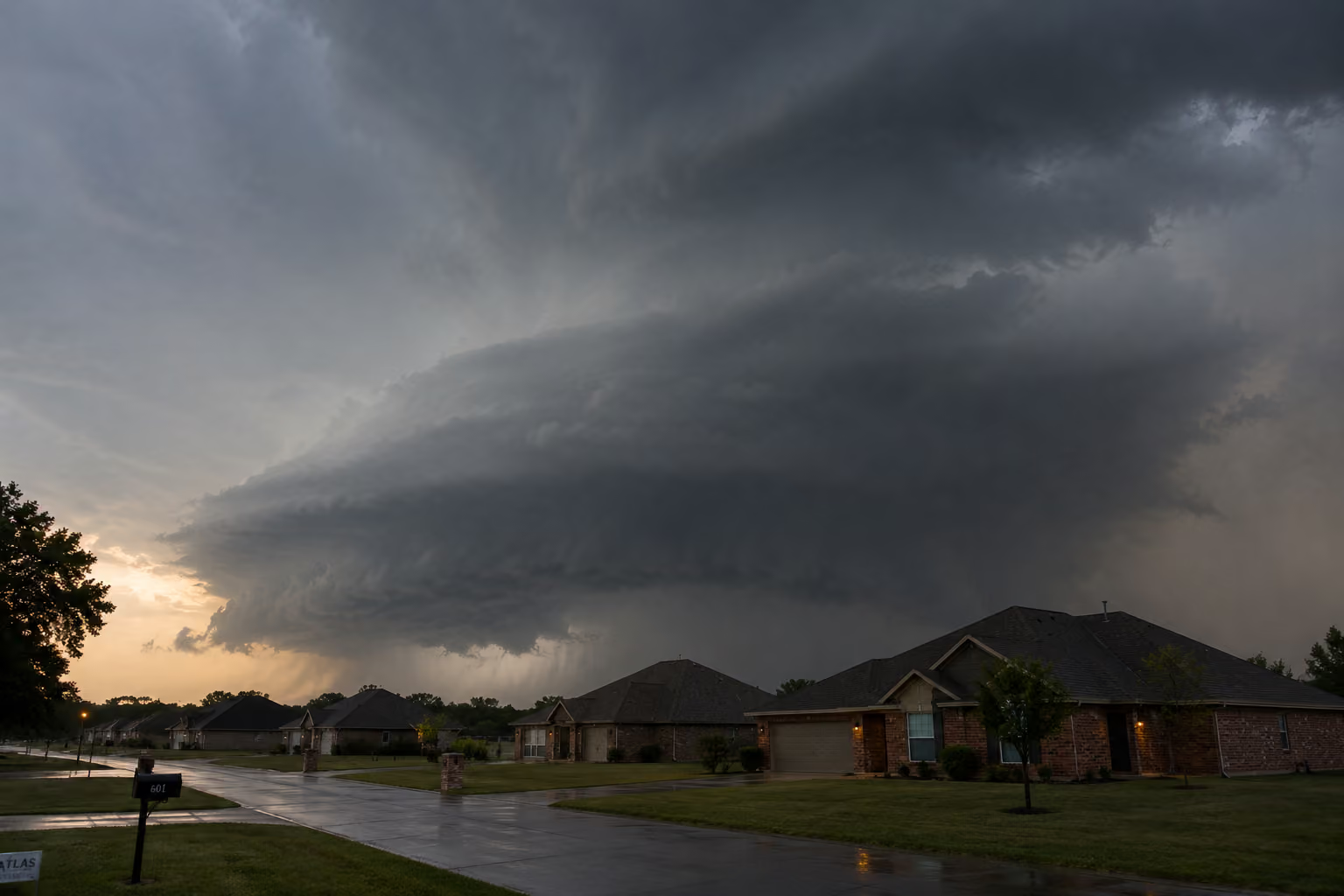
One of the most dangerous misconceptions about tornadoes is believing they'll continue moving in the same direction.
In reality, tornado paths can shift, curve, widen, narrow, speed up, slow down, or even appear to stop before changing direction again. While tornadoes generally move with the parent thunderstorm, the circulation inside the storm is constantly evolving, which means the tornado's exact track is rarely as predictable as many people assume.
This matters in Alabama because the state regularly experiences long-track tornadoes, nighttime tornadoes, and rapidly evolving severe weather outbreaks. During these events, even small changes in a tornado's path can determine whether one neighborhood experiences catastrophic damage while another nearby receives little or none.
Understanding why tornado paths change isn't about predicting the exact movement of the next tornado. It's about understanding why every warning should be taken seriously and why waiting to "see where it's going" can waste valuable time.
Why Don't Tornadoes Travel in Straight Lines?
A tornado is connected to a rotating thunderstorm known as a supercell.
That storm is constantly changing.
As the parent storm evolves, the tornado beneath it can respond to changes in:
- storm structure
- wind direction at different heights
- surrounding air temperature
- inflow of warm, moist air
- terrain interactions
- new circulations developing inside the storm
Because all of these factors are changing simultaneously, the tornado's path may change as well.
Some tornadoes travel remarkably straight.
Others produce noticeable curves.
Some temporarily weaken before strengthening again a short distance away.
This changing movement is one reason meteorologists avoid telling people exactly where a tornado will travel. Instead, warnings identify an area of risk based on the storm's expected movement.
Why It Looks Like a Tornado "Turned"
After major Alabama tornado outbreaks, people often say things like:
- "It suddenly turned toward us."
- "It wasn't coming this way until the last minute."
- "It skipped our house."
- "It doubled back."
Most of the time, the tornado did not literally make a sharp turn.
Instead, several things may have happened.
The Storm Changed Direction
Supercells can gradually change their movement over time.
When the storm shifts, the tornado underneath also shifts.
The Tornado Widened
Many tornadoes become much wider during their life cycle.
A home that originally appeared outside the path may suddenly be inside the damage area as the circulation expands.
The Tornado Reformed
Sometimes the original tornado weakens while another circulation forms nearby.
To someone watching from the ground, this can appear as though the tornado suddenly changed direction.
Meteorologists refer to this as a complex tornado evolution rather than a simple turn.
Perspective Can Be Misleading
Watching a tornado from miles away makes judging its movement extremely difficult.
Objects in the foreground, road direction, hills, trees, and visibility can all make the tornado appear to move differently than it actually is.
This is one reason emergency managers strongly discourage trying to visually track tornadoes instead of relying on official warnings.
Alabama's Tornado History Makes Path Changes Especially Important
Alabama sits within the heart of Dixie Alley, one of the most active tornado regions in the United States.
Unlike many Plains tornadoes that travel across wide-open farmland, Alabama tornadoes often move through:
- forests
- rolling hills
- growing suburbs
- small towns
- densely populated communities
Limited visibility caused by trees, hills, and nighttime storms can make it difficult to judge where a tornado is actually heading.
Imagine you're watching a storm from your front porch.
The tornado appears to be moving toward another neighborhood.
A few minutes later, the warning polygon shifts, the circulation widens, or the storm changes direction slightly.
Suddenly, your home is inside the projected path.
This is why emergency officials encourage Alabama families to act when a warning is issued—not after trying to determine whether the tornado will "miss."
Families can monitor developing severe weather using the 24-hour tornado tracker, but that tool should be used to increase awareness, not to wait until the last possible moment before taking shelter.
Why Forecasting an Exact Tornado Path Isn't Possible
One of the most common questions after a tornado warning is:
"Can meteorologists tell exactly where the tornado will go?"
The honest answer is no.
Modern radar technology has improved dramatically, allowing meteorologists to identify rotating thunderstorms earlier than ever before. However, even with advanced radar, weather models, and experienced forecasters, tornadoes remain highly dynamic.
Meteorologists can estimate:
- the storm's overall direction
- the speed of the parent thunderstorm
- the area most at risk
- where rotation is strongest
What they cannot guarantee is the exact path a tornado will take from one minute to the next.
Small changes inside the storm can produce noticeable tornado track movement, especially over several miles.
That uncertainty is why tornado warnings cover an area instead of a single street or neighborhood.
For Alabama homeowners, the safest response is never to assume your property is safe simply because the tornado appears to be moving somewhere else.
A Small Shift Can Have Major Consequences
Many tornadoes don't need to make a dramatic turn to produce completely different outcomes.
A shift of only a few hundred yards can determine whether a neighborhood experiences:
- roof damage
- fallen trees
- catastrophic structural damage
- or no direct impact at all
This helps explain why homeowners sometimes ask why one community was devastated while another nearby experienced very little damage.
The difference may have been a relatively small change in the tornado's track combined with differences in wind intensity and debris.
Misunderstandings That Can Put People at Risk
Several myths continue to circulate about tornado movement.
Myth: Tornadoes Always Travel in Straight Lines
Most tornadoes generally move with their parent storm, but their exact path can curve, widen, narrow, or shift as storm conditions change.
Myth: You Can Watch a Tornado and Decide If You're Safe
Distance, rain, darkness, trees, and terrain make it extremely difficult to judge where a tornado is actually heading.
By the time movement appears obvious, valuable sheltering time may already be gone.
Myth: If It Misses My Neighbor, It Will Miss Me
Every tornado is different.
Small changes in movement or circulation can dramatically change who is affected.
Assuming that nearby damage—or lack of damage—predicts your own risk is dangerous.
Myth: Radar Can Show the Exact Future Path
Radar shows what the storm is doing now.
Forecasts estimate where it is likely to move.
No technology can predict every movement a tornado will make once it forms.
Preparation Matters More Than Prediction
Because tornado movement is never perfectly predictable, preparation should begin long before a warning is issued.
Every Alabama family should:
- know where they will shelter
- have multiple ways to receive weather alerts
- understand local warning terminology
- avoid relying only on outdoor warning sirens
- practice moving to shelter quickly
Learning about Alabama tornado safety before storm season can help families respond more confidently when severe weather develops.
Weather awareness is not about eliminating uncertainty.
It's about reducing the time between receiving a warning and reaching protection.
For developing storms and changing conditions, homeowners can also monitor Storm Mode for additional severe weather awareness while continuing to follow official National Weather Service warnings.
Why Unpredictable Tornado Paths Make Shelter Planning More Important
No homeowner can control where a tornado will travel.
What you can control is how prepared your family is before severe weather arrives.
The uncertainty of tornado movement is one reason many Alabama homeowners begin researching Alabama storm shelters long before the next warning is issued.
Whether a tornado shifts slightly or follows its projected path exactly, having a reliable shelter available removes the need to make last-second decisions during rapidly changing conditions.
Every property is different, and the best shelter depends on factors such as:
- property layout
- family accessibility
- installation location
- household size
- emergency planning goals
The goal isn't predicting the tornado.
The goal is being prepared regardless of where it ultimately travels.
How to Prepare Before the Next Tornado Warning
Before severe weather season arrives, Alabama homeowners should:
- review their family emergency plan
- identify the fastest shelter location
- enable wireless emergency alerts
- understand local tornado terminology
- avoid relying on visual confirmation
- review severe weather plans with every family member
A tornado warning is not the time to decide where you'll take shelter.
Those decisions should already be made.
Explore Storm Shelter Options Before the Next Warning
Understanding why tornado paths change helps explain why preparation matters.
Compare shelter options designed to help Alabama families stay protected during rapidly changing severe weather conditions.