Storm Shelter Cost in 2026: Full Pricing Guide for Alabama Slab Homes
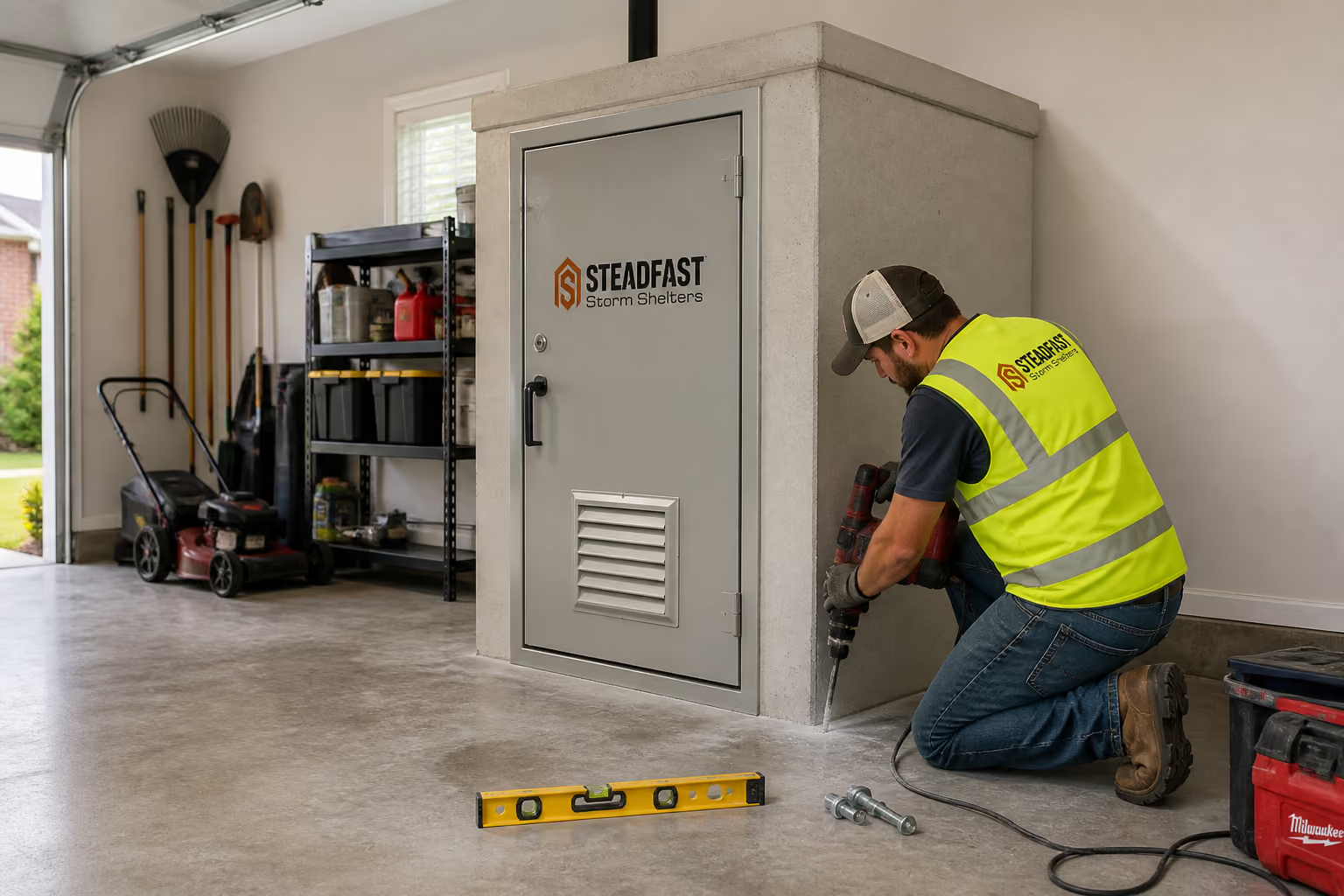
In 2026, a professionally installed storm shelter typically costs between $4,500 and $12,000, with most Alabama families spending an average of $6,500 for a high-capacity concrete or steel unit. For homeowners on a slab foundation, the choice often comes down to an above-ground safe room or a dedicated outdoor underground unit.
In the South, the cost of a shelter isn't just about the price tag; it’s about eliminating that 2:00 AM panic when the sirens begin to wail. For families in Alabama, Tennessee, and Kentucky, living without a designated safe space means making a dangerous gamble with every seasonal "Second Season" or spring outbreak. Investing in a shelter protects your most valuable assets—your family—from the structural failures that occur when high-end EF3+ winds hit a standard residential home.
This guide will break down exactly what you're paying for, from material durability to installation labor. You will walk away with a clear understanding of which shelter type fits your budget and the confidence to choose a life-saving solution that secures your home’s value and your family’s safety.
Understanding Modern Tornado Shelter Costs and Options
A residential storm shelter is a life-safety structure engineered to withstand the extreme wind speeds and debris impact of an EF5 tornado. Unlike a standard room or a basement, these units are specifically anchored to a reinforced foundation and equipped with impact-tested doors that prevent pressure changes from breezing through the structure. In practical terms, how much is a storm shelter depends largely on whether you opt for a steel safe room or a residential concrete shelter, both of which are designed to provide a "near-absolute protection" envelope during a catastrophic weather event.
For homeowners in the South, the tornado shelter cost is an investment in risk mitigation. In regions like Alabama and Tennessee, slab-on-grade homes are particularly vulnerable; without a basement, there is simply no safe place to go when a high-end vortex passes over. The impact isn't just theoretical—it's the difference between navigating the aftermath of a storm with your family intact or facing the unthinkable. When you invest in a shelter, you are effectively buying the certainty that your family has a 250-mph-rated sanctuary just steps away from the kitchen or garage.
The primary benefits of installing a certified unit include:
- Engineering Compliance: High-quality shelters meet or exceed FEMA 361 and ICC 500 standards.
- Property Value: A permanent shelter is a sought-after feature in "Tornado Alley," often increasing resale appeal for safety-conscious buyers.
- Immediate Accessibility: Above-ground units provide easy entry for those with mobility issues, while underground storm shelters maximize yard space.
A common misconception is that safe room cost is purely based on size. In reality, the price often reflects the complexity of the installation and the quality of the anchoring system. Understanding these variables is the first step in determining which model fits your specific property layout.
2026 Price Breakdown: What Determines Storm Shelter Cost?
In 2026, the average storm shelter cost in the South ranges from $4,500 to $12,000, but this figure is highly dependent on your home's foundation and the specific level of protection you require. For most Alabama residents living on a concrete slab, the most cost-effective and structurally sound choice is a residential concrete shelter. These units are engineered to meet ICC 500 standards, ensuring that even if the rest of your home is compromised, the shelter remains anchored and intact.
Understanding the "why" behind the pricing helps you avoid overpaying for unnecessary features while ensuring you don't cut corners on life-saving engineering. Several variables converge to create your final quote, from the raw material prices of steel and concrete to the specialized labor required for high-wind anchoring.
The Primary Cost Drivers: Above-Ground vs. Underground
The most significant factor in your budget is the physical location of the unit. While both options offer "near-absolute" protection when built to FEMA P-361 standards, their installation requirements differ wildly.
- Above-Ground Safe Rooms ($4,500 – $9,500): These are typically bolted to an existing reinforced concrete slab, often in a garage or a dedicated room. This is the most popular choice for Alabama slab homes because it avoids the high cost of excavation.
- Underground Storm Shelters ($6,500 – $15,000+): These require heavy machinery to excavate the earth, proper drainage systems, and waterproofing. While underground storm shelters offer the psychological comfort of being "below the wind," they carry a higher price tag due to the site preparation involved.
Material Selection: Concrete vs. Steel
Material choice impacts both the tornado shelter cost and the long-term maintenance of the unit.
- Concrete: Generally the most budget-friendly. Precast concrete shelters are incredibly heavy, using their mass to resist wind forces. They are ideal for outdoor installations or garage placements where space is less of a premium.
- Steel: These units are often more expensive ($6,000 - $12,000) but offer a slimmer profile. They are modular, meaning they can be installed inside existing closets or small garage corners where a bulky concrete unit wouldn't fit.
Size and Capacity Requirements
Size is a direct multiplier for above ground storm shelter cost. FEMA guidelines recommend a minimum of 5 square feet per person for tornado protection.
- 4-6 Person Units: The "standard" family size, typically falling in the $4,500 - $7,000 range.
- 10-12 Person Units: Designed for large families or small businesses, these often push toward the $9,000+ mark due to the increased materials and the need for more robust anchoring points.
Hidden Costs: Permitting and Delivery
When asking how much is a storm shelter, many homeowners forget the "soft costs" associated with local regulations. In many Alabama and Tennessee municipalities, a building permit is required to ensure the shelter is registered with emergency services.
- Permits and Inspections: Usually range from $50 to $250.
- Delivery/Freight: Depending on your distance from the manufacturing facility, delivery fees for a 15,000-pound concrete unit can add $300 to $1,000 to your total.
For a deeper dive into common technical questions or site-specific requirements, our Learning Center FAQs provide additional clarity on the installation timeline and soil testing for our service areas. By understanding these tiers, you can move from general research to a specific budget that aligns with your home's layout and your family's safety needs.
How Real Alabama Families Navigate Storm Shelter Cost and Selection
Moving from a general budget to a specific installation requires looking at how different property types dictate the final safe room cost. Here are three common ways homeowners in the South apply these pricing factors to their specific needs.
Use Case #1: The Suburban Slab Home
A family in Madison, Alabama, living in a modern slab-on-grade home, needed an accessible solution for two young children and an elderly parent. They prioritized an above ground storm shelter cost that stayed under $6,500. By choosing a garage-installed residential concrete shelter, they avoided expensive excavation while gaining a near-flush entry point. The outcome was a one-day installation that provided immediate peace of mind without a massive construction footprint.
Use Case #2: The Rural Property with Limited Indoor Space
A homeowner in rural Tennessee lacked garage space but had ample backyard acreage. They were concerned that an underground storm shelter cost would be prohibitive due to the local rocky soil. After a site assessment, they opted for a pre-cast underground unit placed near the back porch. While the excavation added $1,800 to the base price, the outcome was a high-capacity sanctuary that didn't take up valuable square footage inside the home.
Use Case #3: The Interior Retrofit
A couple in a historic Kentucky home chose a modular steel safe room to fit inside a reinforced walk-in closet. While the tornado shelter cost was higher for steel, the outcome allowed them to maintain the home’s aesthetic while having an EF5-rated refuge just steps from their bedroom.
These scenarios demonstrate that while the initial investment varies, the result is a customized safety plan that fits the physical and financial constraints of your property.
Pro Tips for Lowering Your Total Investment
Understanding the base storm shelter cost is only the first step. Applying these professional insights can help you maximize the value of your installation while potentially recouping a significant portion of your initial outlay. In 2026, the difference between a standard purchase and a strategic one often comes down to timing and local incentives.
- Leverage the Alabama Storm Shelter Tax Credit: Alabama homeowners can claim a state income tax credit of up to $3,000 (or 50% of the total cost) for shelters that meet FEMA P-361 standards. To qualify, you must submit your documentation—including an engineered design seal—to the AEMA within the same calendar year as your installation. This effectively slashes the net cost of a high-end unit.
- Time Your Purchase for Sales Tax Holidays: Alabama typically hosts a Severe Weather Preparedness Sales Tax Holiday every February. While big-ticket items like generators have specific limits, many homeowners use this window to purchase essential safety supplies and first-aid kits to stock their residential concrete shelter tax-free.
- Consult Your Insurance Provider Before Installation: Many insurance carriers in the South offer premium discounts for homes equipped with an ICC 500-certified safe room. By reducing the "life-safety" risk on your policy, the shelter can partially pay for itself over time through annual premium savings.
- Verify Foundation Specs Early: For slab homes, the thickness of your garage floor dictates your safe room cost. If your slab is less than 4 inches thick, you may need a reinforced "footing" poured, which can add $500–$1,000 to the labor. Checking this during your initial quote prevents surprise change orders on installation day.
By following these best practices, you move from simply buying a product to executing a strategic home improvement that protects both your family and your finances.
Secure Your Future: Finalizing Your Storm Shelter Investment
Investing in a storm shelter is one of the most significant decisions an Alabama homeowner can make for their family’s long-term safety. By now, you understand that while the initial storm shelter cost ranges from $4,500 to $12,000, the availability of state tax credits and insurance discounts can significantly offset your net expenditure. Whether you opt for a sleek interior safe room or a rugged outdoor unit, you now have the pricing data and logistical knowledge to choose a solution that fits your specific foundation and budget.
Don't wait for the next siren to regret an empty garage corner or a vulnerable backyard. Taking action today replaces the fear of the unknown with the confidence of a certified safety plan, ensuring that your loved ones are protected the moment the weather turns.
Take the next step toward "near-absolute protection" by exploring our specific residential concrete shelter options or request a personalized quote to lock in your 2026 installation date.
Common Questions About Storm Shelter Cost and Installation
Navigating the financial and technical aspects of storm protection can feel overwhelming. These frequently asked questions address the most common concerns for homeowners in Alabama, Tennessee, and Kentucky as they finalize their safety plans for 2026.
Is a concrete or steel storm shelter more cost-effective?
Generally, a pre-cast concrete shelter is the most budget-friendly option for outdoor or garage placement, typically costing between $4,500 and $7,000. While steel safe rooms offer a slimmer profile for interior retrofits, they often command a higher price due to material costs. Both materials provide identical EF5-rated protection, so your choice should depend more on your home’s layout and available installation space than on safety ratings alone.
Can I get an insurance discount for installing a storm shelter?
Yes, many insurance providers in the South offer premium discounts for homes equipped with a FEMA-compliant safe room. In Alabama specifically, state law mandates discounts for various wind mitigation improvements. By installing a certified unit, you reduce the "life-safety" risk of your property, which can lead to annual savings on your homeowners' insurance policy. We recommend consulting your agent to see how much your specific storm shelter cost can be offset by these credits.
How long does the installation process typically take?
For slab-on-grade homes, an above-ground safe room installation is remarkably fast, often completed in just 4 to 6 hours. Because the unit is anchored directly to your existing reinforced garage slab, there is no need for extensive excavation. Underground units or outdoor concrete shelters require more site preparation and heavy machinery, which usually extends the process to a full day. In either case, your home is typically secured and ready for use within 24 hours.
Does the 2026 Alabama Tax Credit apply to all shelter types?
The Alabama Storm Shelter Tax Credit applies to both above-ground and underground shelters, provided they meet the current ICC 500 (2020) and FEMA P-361 (2021) standards. You can claim up to $3,000 or 50% of the total cost, but you must provide an invoice with a zero balance and a specification sheet featuring a professional engineer's seal. It is critical to apply within the same calendar year as your installation to remain eligible for the state’s annual $2 million credit pool.