
How Tornado Winds Damage Roofs and Cause Tornado Debris Injuries in Kentucky
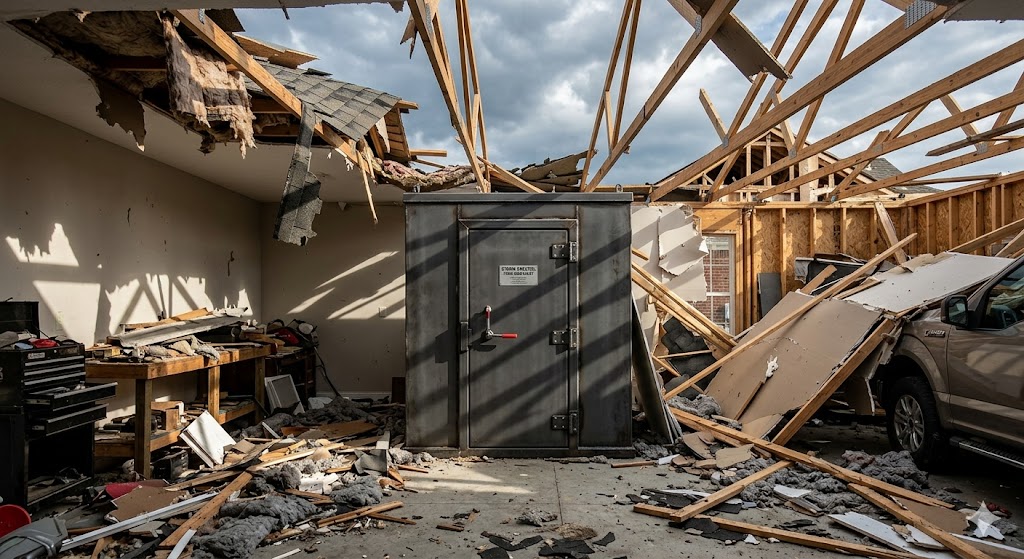
When violent winds tear through a residential area, roof failure isn't just a structural loss—it is the primary catalyst for severe tornado debris injuries. In a matter of seconds, atmospheric pressure drops and extreme updrafts rip shingles, decking, and trusses from a home, transforming heavy building materials into airborne missiles.
For Kentucky homeowners living in slab-on-grade houses or properties without traditional basements, this sudden breach of the home's outer shell removes the only barrier separating your family from flying debris tornado hazards. Understanding how wind loads compromise a roof allows you to accurately assess your structural risks and recognize when a residential structure can no longer provide adequate shelter.
This guide breaks down the engineering mechanics of roof failure, details the realities of debris damage in tornado events, and helps you identify the fail-proof life-safety solutions required to survive an EF-5 storm. Here is how wind-driven structural failures directly impact your physical safety when a severe storm hits the Mid-South.
The Mechanics of Wind Uplift and Tornado Debris Injuries
Wind damage to a roof is not caused by a downward pushing force, but rather by aerodynamic uplift. As intense vortex winds rush over a residential structure, they act like an airplane wing, creating a severe low-pressure zone directly above the roof line. Simultaneously, air forcing its way into the home through broken windows or failed garage doors creates high internal pressure. This massive pressure differential creates an upward lifting force that can tear the roof assembly completely off its framing. When the structural envelope is breached, the immediate consequence is a dramatic spike in tornado debris injuries. High-velocity winds instantly weaponize unsecured building materials, sending shards of broken glass, wood framing, and heavy asphalt shingles flying through the interior living spaces.
For Kentucky families living in traditional slab homes without a subterranean basement, this sequence of structural failure creates a life-threatening scenario. When a roof fails, a home loses its lateral stability, often causing the exterior walls to collapse inward. This exposure leaves occupants completely unprotected from a flying debris tornado field, which is what causes tornado injuries in the vast majority of severe weather events. To monitor active threats and understand when a home's structural limits are being tested, property owners rely on advanced tracking ecosystems like Storm Mode. Recognizing how quickly a residential roof can transform into airborne hazards underscores the critical need for a localized, independent safety solution.
When evaluating your property's vulnerability to debris damage in tornado conditions, keeping these core mechanics in mind offers distinct safety advantages:
- Accurate Risk Assessment: You can identify whether your home's construction relies on standard framing nails or engineered hurricane clips, which are easily overcome by EF-3 to EF-5 uplift forces.
- Informed Decision Making: You shift your focus from cosmetic storm prep to absolute structural reinforcement, understanding that standard residential roofing cannot withstand sustained tornadic updrafts.
- Proactive Safety Planning: You recognize that interior rooms and closets are entirely dependent on the roof remaining intact overhead.
A common misconception among homeowners is that a heavy roof or high-pitched design provides natural resistance against storm forces. In reality, steep roof pitches can actually increase the surface area exposed to windward pressures, accelerating structural failure. When a standard residential roof fails, the only reliable protection against a falling roof grid or flying projectiles is an engineered safe room. To secure your family before severe weather impacts your region, investing in heavy-duty concrete storm shelters ensures an unbreakable barrier that remains standing even if the surrounding residential structure completely disintegrates.
Structural Vulnerabilities and the Threat of Flying Debris Tornado Hazards
When an intense vortex strikes a residential neighborhood, the loss of a roof is rarely a standalone structural failure. Instead, it triggers a catastrophic domino effect that directly compromises the building's interior living spaces, creating a high-risk environment for severe tornado debris injuries. The structural engineering of a standard residential home relies on the roof to act as a lateral bracing system that holds the exterior walls rigid. When wind uplift pressures tear the roof trusses away from the top plates of the walls, the vertical and horizontal integrity of the entire house is lost. Without overhead bracing, exterior walls quickly buckle under the force of the wind, exposing the family inside to high-velocity impacts from a flying debris tornado field.
To prevent these rapid structural failures from causing catastrophic harm, families must look beyond standard home construction and invest in absolute life-safety infrastructure. Securing an independent, heavy-duty shelter ensures that even when your primary home structure collapses, your physical safety is never compromised. You can explore our engineered concrete and steel view shelter options to find a high-performance system that remains entirely unaffected by structural failure or heavy overhead impacts.
+2
Phase 1: Aerodynamic Lift and Pressure Differentials
Roof failure begins the exact moment tornadic winds accelerate over the peak of a house. According to fluid dynamics, faster-moving air over the roof creates a localized low-pressure zone on the exterior surface. Meanwhile, the air trapped inside the home remains at normal atmospheric pressure. This stark difference creates a powerful upward lifting force. If the connection points between your roof trusses and your walls are only secured with standard framing nails, the lifting force will easily pull the entire roof structure upward, peeling it back and exposing the rooms below to immediate debris damage in tornado conditions.
Phase 2: The Weaponization of Building Materials
Once the roof deck and shingles are torn free, they do not simply fall to the ground. The intense updrafts and rotational forces of the vortex immediately accelerate these heavy building materials to speeds exceeding 100 to 200 mph. At these velocities, a single asphalt shingle can slice through drywall, and a shattered piece of roof decking becomes a lethal projectile. This violent dispersion of broken timber, metal fasteners, and shattered glass is what causes tornado injuries to occupants who are huddled in interior hallways or closets, proving that standard residential framing cannot provide adequate shelter from an EF-3 or stronger storm.
Phase 3: Total Envelope Breach and Wall Collapse
The moment the roof is completely removed, the structural envelope is broken. Wind forces can now enter the home unimpeded, exerting massive outward pressure on the interior walls. Simultaneously, the exterior walls lose their top support anchor. Without the roof holding the upper edges of the walls in place, the wind easily pushes the walls over, causing a total structural collapse. For residents prioritizing proactive protection, practicing proper Kentucky tornado safety means recognizing that an interior room is only safe if the roof stays on. When the roof fails, a reinforced safe room or an outdoor concrete bunker is the only reliable path to survival.
Protecting Your Family from Structural Failures
Understanding this sequence of failure helps clarify why relying on standard residential architecture during a major storm is an extreme risk. Interior closets and bathrooms offer minor protection against low-end winds, but they are entirely dependent on the roof remaining intact overhead. When the roof assembly fails and becomes airborne, those interior spaces are immediately showered with heavy falling debris and high-velocity projectiles.
To achieve absolute security, property owners must decouple their personal safety from the structural integrity of their homes. This is accomplished by installing an EF-5 rated safe room or concrete bunker that is anchored independently to a concrete slab. These structures are specifically engineered to withstand massive wind uplift pressures and direct impacts from flying framing timbers without shifting, cracking, or breaching, ensuring your family remains safe even if the rest of your home is completely destroyed.
Real-World Scenarios of Roof Failures and Tornado Debris Injuries
Transitioning from structural engineering concepts to real-world applications reveals how quickly roof failures translate into life-threatening emergencies. Examining how distinct property layouts withstand severe wind loads helps clarify the steps required to mitigate risk before a storm hits the Mid-South.
Use Case 1: Suburban Slab Home in Western Kentucky
A family living in a modern, single-story slab home in Mayfield noticed structural shifting during an intense storm system. The high external wind velocity created an aerodynamic uplift that detached the garage roof trusses, which instantly weaponized the timber into a violent flying debris tornado field. Because they recognized that standard interior closets fail once the overhead barrier is compromised, they had previously installed an above-ground steel safe room bolted directly to their foundation slab. While the home suffered severe roof failure and extensive debris damage in tornado winds, the family emerged completely uninjured inside their reinforced steel enclosure.
Use Case 2: Rural Property Owner and Flying Debris
A rural property owner near Bowling Green needed to secure a home that featured an older, high-pitched roof design—a structure highly vulnerable to severe atmospheric pressure differentials. He knew that falling roof grids and airborne building materials are what causes tornado injuries in rural zones where emergency response times are delayed. To protect his household, he installed one of our heavy-duty Alabama storm shelters right outside his back door, choosing a reinforced concrete bunker engineered to withstand massive vertical impacts. When an EF-4 vortex tore the roof assembly entirely off his home, the independent structure shielded his family from catastrophic tornado debris injuries.
These real-world events demonstrate that standard residential roofs cannot be relied upon to withstand severe tornadic pressures. You can apply these exact engineering insights to your own property to ensure your family remains completely protected from falling debris and structural collapse.
Proactive Steps to Prevent Tornado Debris Injuries
Understanding the physics of wind uplift allows you to move beyond basic storm awareness and take actionable steps to secure your property. Applying these professional safety insights is the difference between surviving a structural failure and experiencing severe tornado debris injuries during a high-wind event.
- Audit Your Roof-to-Wall Connections: Inspect your attic space to determine if your trusses are secured with standard framing nails or engineered hurricane clips. Upgrading to heavy-duty structural ties significantly reduces the risk of total roof detachment, keeping the protective shell intact and lowering the threat of a flying debris tornado field breaching your living space.
- Assess Your Foundation Slab Integrity: If you own a slab-on-grade home without a basement, your foundation is your greatest safety asset. Ensure your property can accommodate a heavy-duty bolt-down safe room. Reviewing the anchor requirements for specialized steel safe rooms allows you to establish an unyielding interior bunker that withstands extreme vertical and lateral loads.
- Eliminate Potential Airborne Hazards: Walk your property lines and secure loose materials like gravel, weak fencing, and unsecured patio structures. High-velocity winds easily transform ordinary backyard items into lethal projectiles, which is what causes tornado injuries and severe debris damage in tornado events before a storm vortex even makes direct structural contact.
Implementing these structural evaluations minimizes your property's vulnerabilities and ensures your household is fully prepared for severe weather corridors.
Choosing absolute Safety over Structural Vulnerabilities
When a severe vortex impacts a community, the catastrophic failure of standard residential architecture underscores the reality that a home's roof cannot be relied upon for life safety. You now understand how intense wind uplift pressure differentials quickly compromise standard framing connections, leading to severe debris damage in tornado events and a rapid spike in tornado debris injuries. Recognizing that interior closets and hallways fail the moment the overhead barrier is stripped away empowers you to decouple your family's physical security from the structural limits of your house.
Taking a proactive approach to storm safety replaces anxiety with absolute confidence. Securing an engineered, independent shelter ensures that your household remains completely insulated from high-velocity airborne projectiles and total wall collapses during a severe weather threat. Do not leave your family's protection to chance or rely on standard residential framing that is highly vulnerable to a violent flying debris tornado field, which is what causes tornado injuries across the Mid-South corridor.
To eliminate the guesswork and establish a permanent, failure-proof boundary against EF-5 wind loads and falling building materials, take the next step in your emergency preparedness strategy. We invite you to view our certified, high-performance product lineups and view shelter options designed to keep your family safe when seconds matter most.
Frequently Asked Questions About Roof Damage and Tornado Debris Injuries
What causes tornado injuries during a severe structural breach?
The primary driver of severe trauma during a storm is airborne projectiles. When wind uplift rips a roof assembly away from a home, the interior living spaces are immediately exposed to high-velocity winds. These intense currents transform loose construction materials, shattered glass, and household items into a violent flying debris tornado field, which is what causes tornado injuries in the vast majority of residential structural failures.
How does roof failure accelerate debris damage in tornado events?
When a residential roof is detached by aerodynamic forces, the house loses its structural unity. Without the roof tying the frame together, lateral wind pressures cause the exterior walls to buckle and collapse inward. This total envelope breakdown drastically increases debris damage in tornado pathways, as entire wall segments and overhead framing timbers are broken down and violently scattered throughout the property's footprint.
Can an interior closet protect my family from a falling roof grid?
No, standard interior closets and bathrooms offer completely inadequate protection if the roof framing fails overhead. While they provide a buffer against weak, low-end winds, they cannot withstand the vertical impact of heavy falling rafters or collapsing ceiling joists. To ensure true survival-proof protection against falling structural components and severe tornado debris injuries, a property requires an independent, heavy-duty safe room anchored directly to the concrete foundation.
Are above-ground steel safe rooms safe from flying projectiles?
Yes, engineered safe rooms are specifically built to withstand intense impacts and extreme wind pressures. Unlike standard residential framing, which easily permits severe debris damage in tornado conditions, certified systems are strictly tested to meet FEMA P-361 engineering standards. This specialized testing ensures that heavy-duty concrete storm shelters and steel safe rooms remain completely unyielding, protecting occupants from high-speed missile impacts and preventing catastrophic tornado debris injuries.