
Tornado History in Oklahoma
Overview of Tornado Activity in Oklahoma
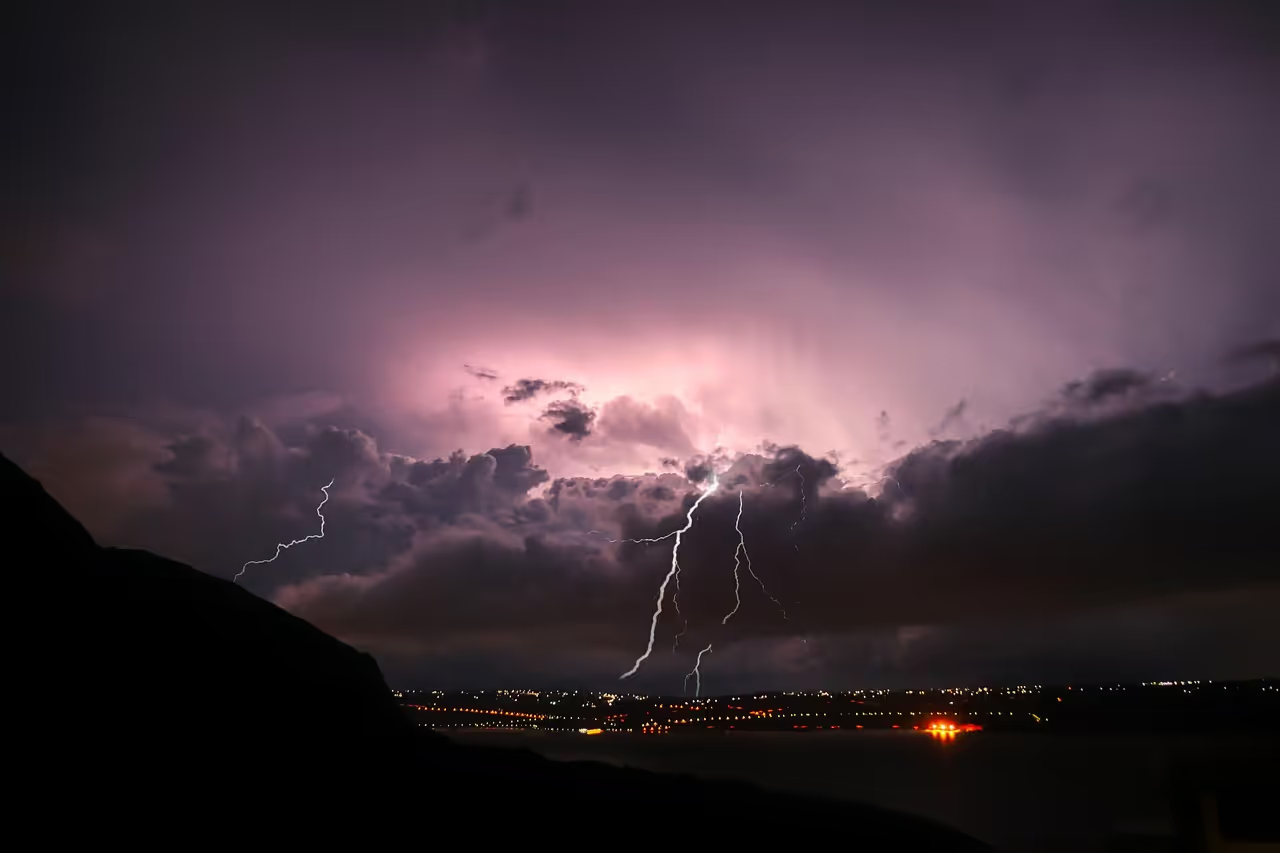
Oklahoma is located in the central United States within a region commonly associated with severe convective weather, including tornadoes. The state’s geography and climate place it at the intersection of warm, moist air from the Gulf of Mexico and cooler, drier air masses from the north and west, creating conditions that can support rotating thunderstorms.
Tornado activity in Oklahoma occurs most frequently during the spring and early summer months, though tornadoes have been documented at other times of the year. Storm impacts vary depending on storm track, intensity, and population distribution, affecting both rural areas and major population centers.
Confirmed Tornadoes in Oklahoma
Based on records from the NOAA Storm Events Database, Oklahoma has experienced approximately 2,700 confirmed tornadoes since standardized digital recordkeeping became more consistent in the early 1990s. These totals reflect tornadoes that were officially surveyed and verified following storm events.
Confirmed tornado counts include only events that met established classification and documentation standards at the time of reporting. Earlier periods may reflect lower totals due to limitations in detection technology, reporting practices, and survey access.
Tornado Warnings Issued in Oklahoma
Tornado warnings are issued by the National Weather Service when meteorologists determine that atmospheric conditions indicate a potential or ongoing tornado threat. These warnings may be based on radar observations, storm spotter reports, or other meteorological indicators.
Since the early 2000s, approximately 5,800 tornado warnings have been issued across Oklahoma. Warning totals are higher than confirmed tornado counts because warnings are precautionary and intended to provide advance notice when storm characteristics suggest elevated risk.
A tornado warning does not necessarily indicate that a tornado touched down. Many warnings are issued to protect life and property when storm conditions warrant heightened awareness.
Tornado and Warning Trends Over Time in Oklahoma
Historical tornado data shows that tornado activity and warning issuance in Oklahoma have varied over time, influenced by changes in weather monitoring technology, reporting practices, and population patterns.
- 1990s: Tornado documentation relied largely on ground surveys and post-storm assessments, with limited radar resolution and fewer real-time detection tools.
- 2000s: Expansion of Doppler radar coverage improved storm detection capabilities and contributed to increased tornado warning issuance statewide.
- 2010s: Advances in radar technology, communication systems, and survey coordination resulted in more consistent tornado confirmation and improved warning dissemination.
- 2020s: Continued refinements in data collection, digital reporting, and survey methodologies continue to shape how tornado events and warnings are documented.
Changes in warning frequency over time often reflect improvements in detection and reporting rather than an increase in tornado occurrence.
Tornado History in Major Oklahoma Cities
The following cities have dedicated service pages that provide localized storm shelter information. Tornado history data is generally recorded at the county level rather than by city boundaries.
How to Interpret Tornado History Data
When reviewing tornado history data, it is important to understand several limitations and contextual considerations:
- Tornadoes are typically recorded at the county level, not by city boundaries.
- Survey access, damage visibility, and population density influence confirmation accuracy.
- Historical records may be revised as new information becomes available.
- Tornado warnings represent risk-based alerts, not confirmed tornado touchdowns.
- Detection technologies and reporting practices have evolved significantly over time.
Tornado history data should be viewed as an informed historical reference rather than an exact accounting of all past storm activity.
Related Tornado Tools
Frequently Asked Questions