
Storm Shelters in Battle Creek, MI
Steadfast Storm Shelters helps homeowners, businesses, schools, churches, healthcare facilities, manufacturers, and property managers compare storm shelter options in Battle Creek, Michigan. Available products include steel safe rooms, underground storm shelters, and commercial storm shelters. Recommendations are based on property layout, accessibility, occupancy, delivery requirements, and the installation pathway available for the selected product.
Located in Calhoun County along the I-94 corridor, Battle Creek is a major Southwest Michigan center for manufacturing, food production, healthcare, transportation, logistics, and military-related activity. Its mix of historic neighborhoods, newer subdivisions, larger suburban lots, industrial campuses, schools, churches, and public facilities creates varied shelter-planning needs. Although many homes include basements, structural design, accessibility, and emergency access may influence whether a purpose-built safe room or underground shelter is practical.
- Safe Room, Underground, and Commercial Options
- Residential and Commercial Shelter Guidance
- Serving Battle Creek and Calhoun County
- Delivery and Installation Coordination Available
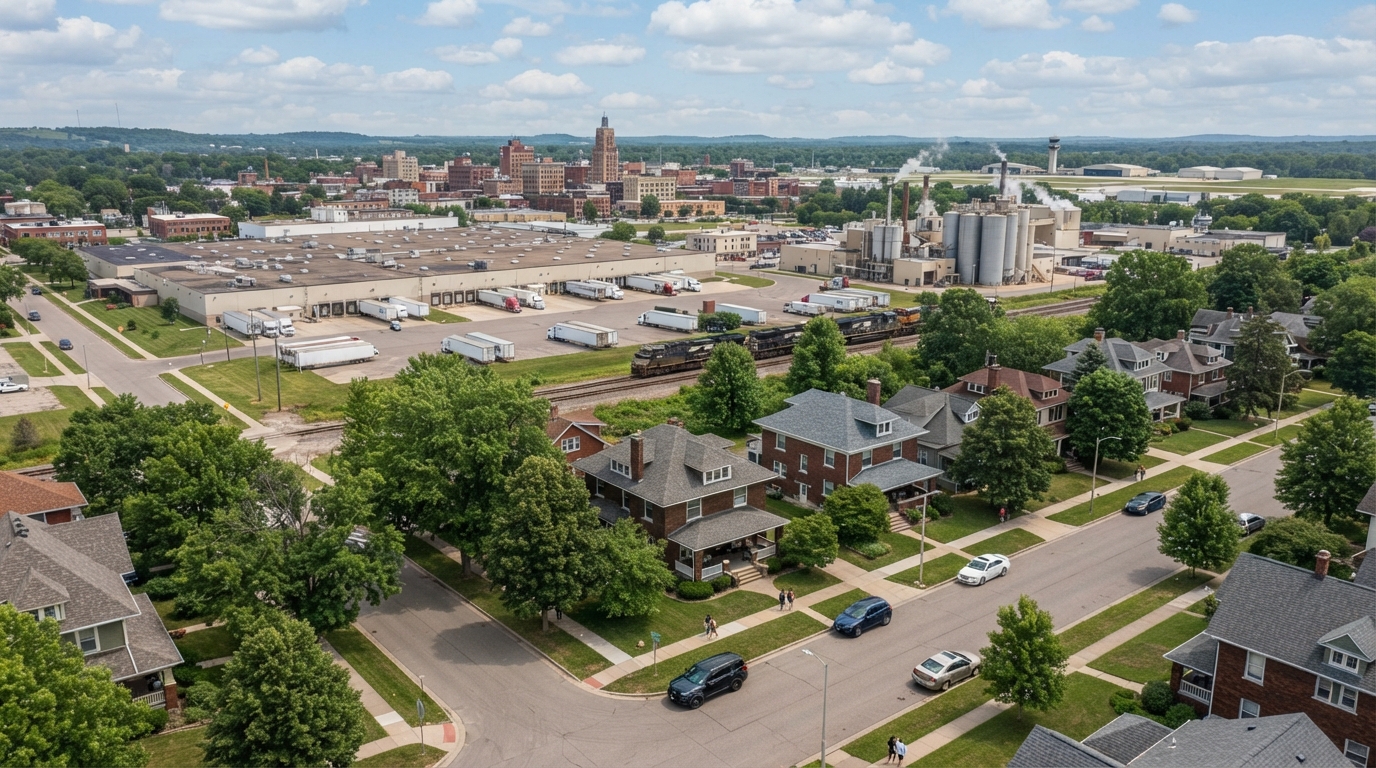
Storm Shelter Options in Battle Creek, MI
The right storm shelter depends on the property, available space, accessibility needs, site conditions, occupancy, and installation requirements. Steadfast helps Battle Creek customers compare the three shelter categories currently available in Michigan before moving into a product-specific quote and planning process.
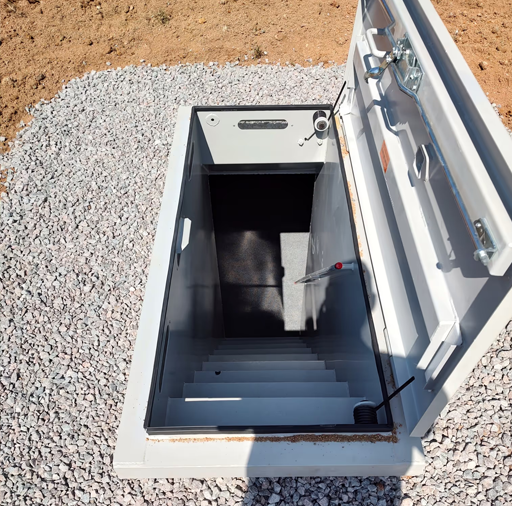
Underground Storm Shelters
Underground storm shelters provide below-ground protection for properties where excavation, drainage, groundwater, clay-rich soils, utility placement, grading, and equipment access support installation.
Best For
- Larger residential or suburban properties
- Rural acreage
- Approved backyard or garage-floor placement
- Industrial or commercial sites with suitable access
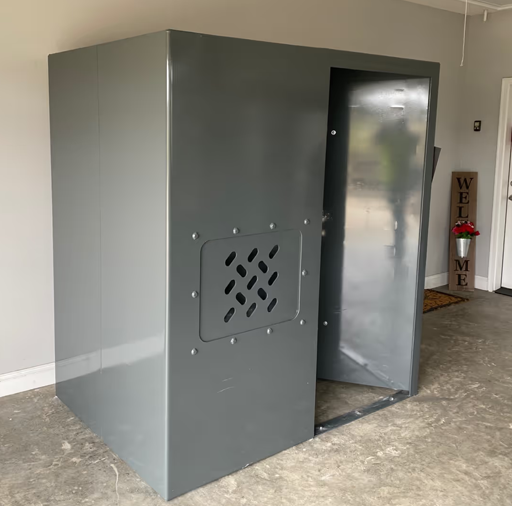
Safe Rooms
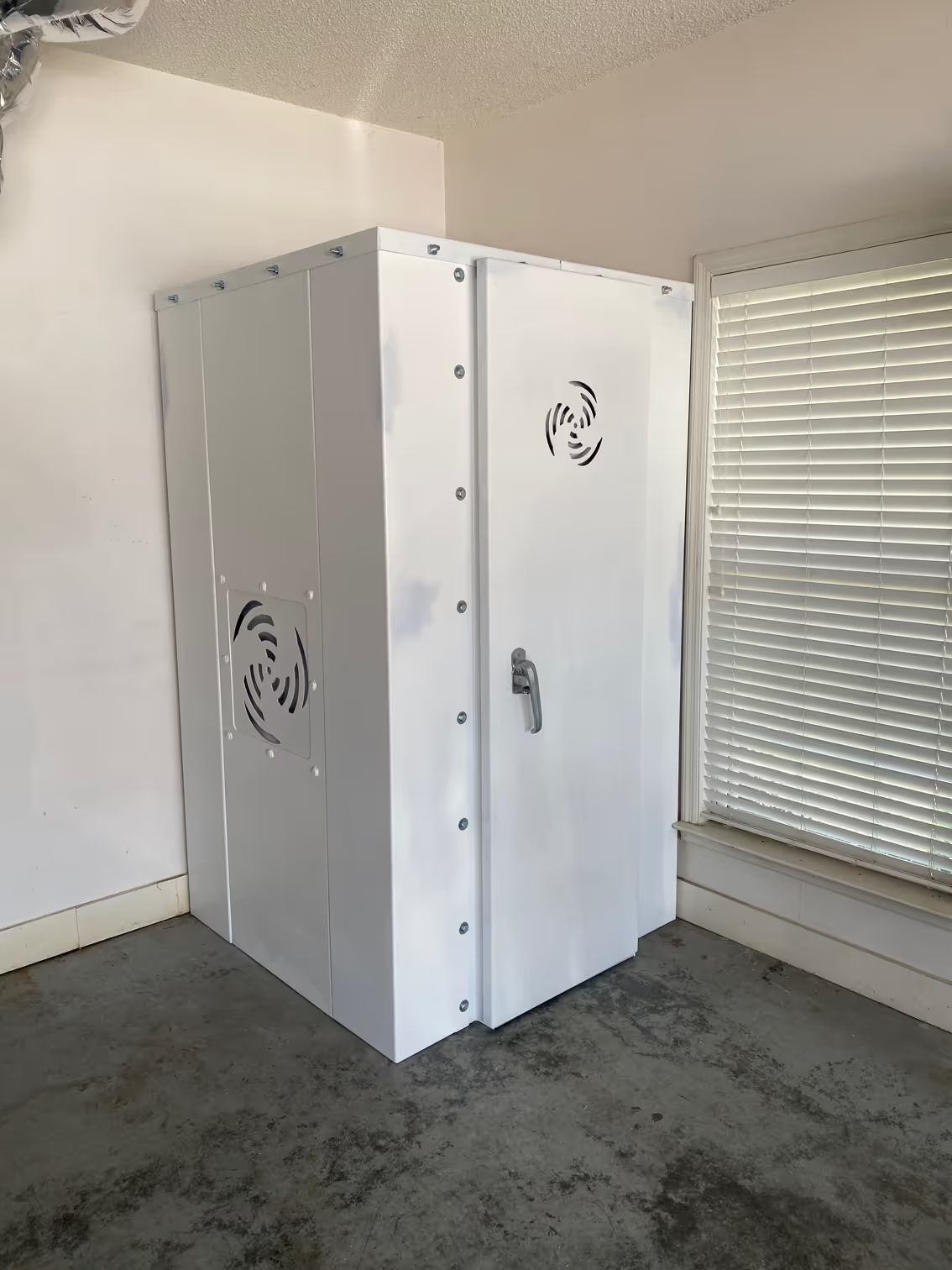
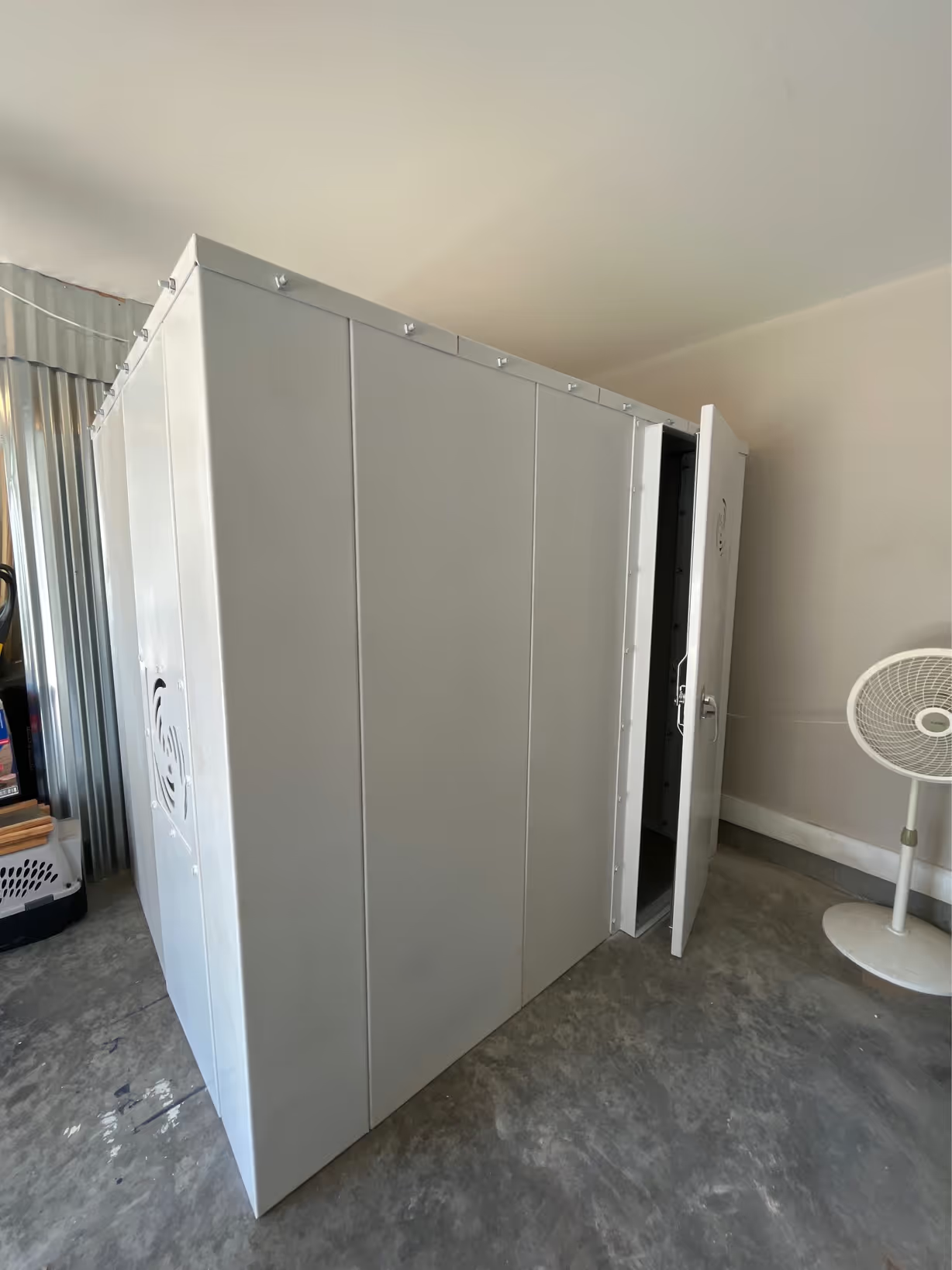
Steel safe rooms provide fast-access protection inside an approved garage or interior location without requiring occupants to travel outside during severe weather.
Best For
- Attached garage or approved interior placement
- Fast access from inside the home or building
- Historic neighborhoods and newer subdivisions
- Homes and facilities prioritizing accessibility
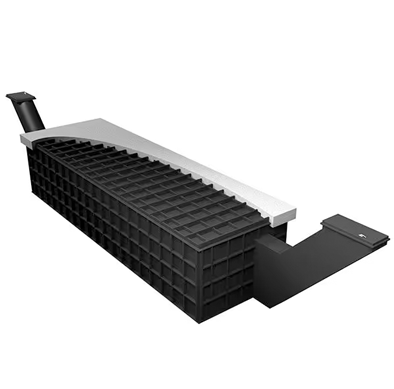
Commercial Storm Shelters
Commercial storm shelters provide dedicated protection areas for higher-occupancy properties where facility layout, occupant access, emergency planning, and project requirements must be evaluated together.
Best For
- Food-production and manufacturing facilities
- Logistics and transportation properties
- Healthcare campuses and schools
- Churches, municipal, and public facilities
Storm Shelter Protection for Battle Creek Homes and Businesses
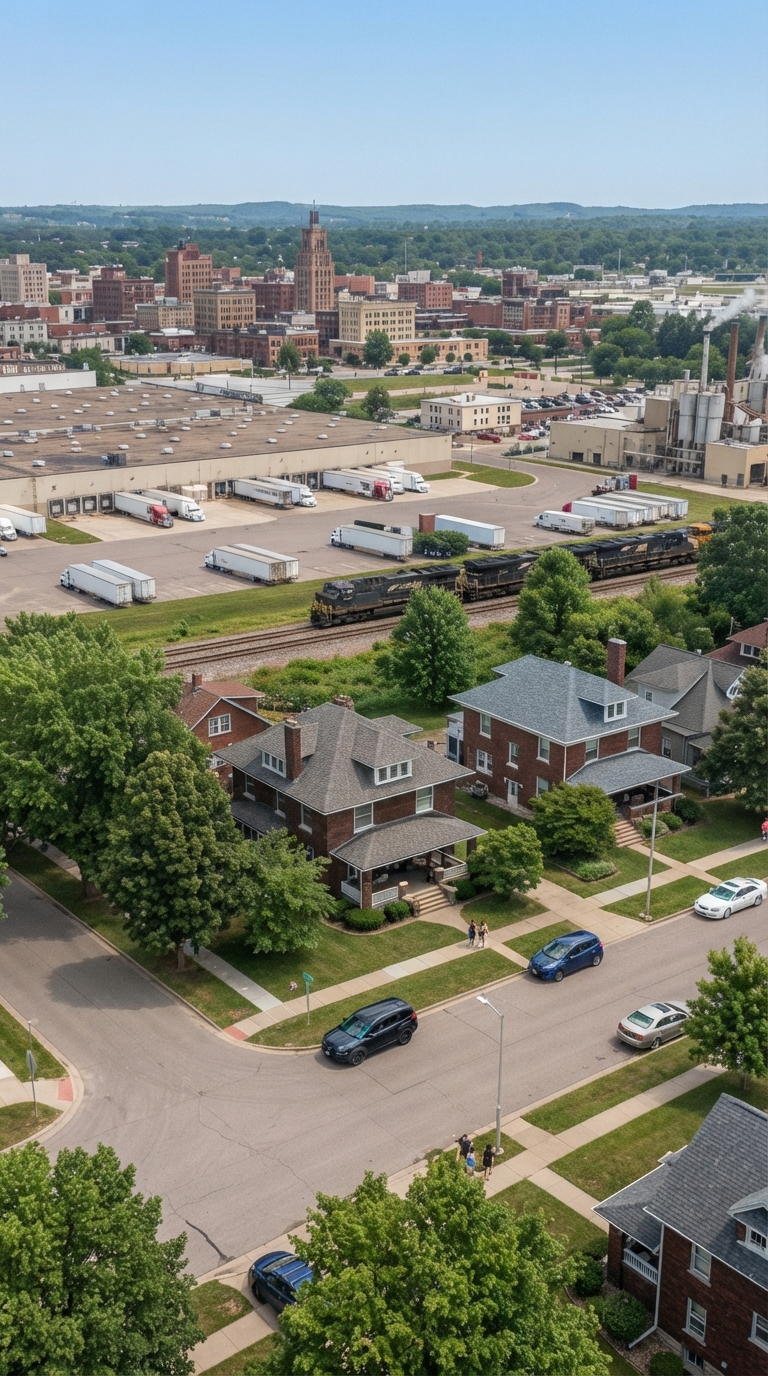
Battle Creek is located in Calhoun County in Southwest Michigan and serves as a major regional center for manufacturing, food production, healthcare, military operations, transportation, and commercial activity. Its location along the I-94 corridor between Kalamazoo and Jackson has supported continued residential and industrial growth. The city includes historic neighborhoods, newer subdivisions, larger suburban lots, manufacturing campuses, logistics centers, healthcare facilities, schools, churches, municipal buildings, and surrounding rural properties. These different environments influence shelter access, placement flexibility, occupancy planning, and installation requirements.
Severe thunderstorms moving through Southwest Michigan can produce tornadoes, damaging straight-line winds, large hail, and heavy rainfall during Michigan's severe-weather season. Many Battle Creek homes include basements, but a basement is not automatically an engineered tornado shelter. Structural design, accessibility, basement layout, and emergency access may influence whether a steel safe room or underground shelter is a practical addition.
Attached garage safe rooms may work well for historic neighborhoods, established residential communities, and newer subdivisions where dependable indoor access is a priority. Larger suburban lots and surrounding rural properties may provide more flexibility for underground shelter installation where clay-rich soils, drainage, groundwater, utilities, grading, and equipment access support excavation. Commercial shelter planning may also be appropriate for food-production facilities, manufacturers, logistics centers, healthcare properties, schools, churches, municipal buildings, airport-area operations, and facilities associated with Fort Custer.

Why Storm Shelters Matter in Battle Creek, MI
Severe-weather preparedness in Battle Creek must account for older residential construction, growing suburban areas, industrial occupancy, healthcare operations, transportation facilities, and the time required to move people into a clearly identified protection area. A purpose-built storm shelter can be evaluated around the property's structural conditions, available space, occupancy, emergency procedures, and intended use.
Local Severe-Weather and Property Considerations
- Tornado-producing thunderstorms
- Damaging straight-line winds
- Large hail and heavy rainfall
- Historic homes with varied basement layouts
- Newer subdivisions and larger suburban lots
- Clay-rich soils and drainage conditions
- Manufacturing, food-production, and logistics occupancy
- Healthcare, education, military, and municipal planning
For homeowners, the decision often centers on whether an interior safe room provides dependable access or whether the property can support an underground shelter. For manufacturers, food-production plants, logistics centers, healthcare facilities, schools, churches, municipal properties, and public operations, planning also includes employee, student, patient, visitor, customer, and contractor movement during severe weather.
Storm Shelter Delivery and Installation Planning in Battle Creek
Every Battle Creek project begins with a review of the property, selected shelter type, delivery route, installation location, access requirements, and available installation pathway. Delivery and installation arrangements may vary by product, property conditions, manufacturer requirements, location, controlled-access restrictions, site limitations, and approved installation-partner availability.
Steadfast helps customers understand the planning process and coordinates the available next steps. Shelter placement and installation methods are not finalized until the property, product requirements, slab or soil conditions, drainage, groundwater, utility locations, grading, equipment access, and fulfillment pathway have been reviewed.
Planning Process
- Property and access review
- Shelter placement planning
- Delivery-route evaluation
- Utility-location coordination
- Garage slab or excavation review
- Drainage and groundwater consideration
- Soil and grading review
- Equipment-access evaluation
- Facility or controlled-access review when applicable
- Installation-provider confirmation
- Final project coordination
Battle Creek Installation Factors
Battle Creek's combination of historic neighborhoods, newer subdivisions, larger suburban properties, manufacturing campuses, logistics facilities, and surrounding rural land creates distinct installation considerations. Older and newer garage slabs may require different levels of evaluation before safe room placement. Clay-rich soils, drainage patterns, groundwater, freeze-thaw cycles, underground utilities, grading, mature trees, and seasonal ground conditions may influence underground shelter feasibility.
Established neighborhoods may involve narrow drives, nearby structures, utility conflicts, mature landscaping, and limited equipment access. Larger rural and industrial properties may offer more placement flexibility but require careful review of delivery routes and equipment movement. Food-production plants, manufacturers, logistics centers, healthcare facilities, schools, churches, municipal buildings, Battle Creek Executive Airport-area operations, and Fort Custer-related facilities may require additional coordination involving controlled access, security, occupancy, scheduling, documentation, and manufacturer requirements before installation is finalized.
Need Help Choosing the Right Storm Shelter?
Every Battle Creek property presents different access, soil, utility, occupancy, and installation considerations. Whether you're comparing a steel safe room, an underground storm shelter, or a commercial shelter, Steadfast can help you evaluate the available options and identify a practical pathway based on the property's layout and intended use.
Cities Near Battle Creek, MI We Serve
Steadfast serves Battle Creek and surrounding communities throughout Calhoun County and Southwest Michigan. Property owners outside Battle Creek may also find city-specific storm shelter information for the following nearby communities.
Nearby Cities
Why Choose Steadfast Storm Shelters in Battle Creek
Why Customers Choose Steadfast
- Guidance for residential and commercial properties
- Safe room, underground, and commercial shelter options
- Recommendations based on property conditions
- Delivery and installation coordination through approved partners
- Financing information for qualified customers and eligible projects
- Straightforward, consultative quote process
- Service coordination throughout Battle Creek and Southwest Michigan
Battle Creek homes, food-production plants, manufacturing campuses, logistics centers, healthcare facilities, schools, churches, municipal buildings, airport-area operations, and public facilities present different planning requirements. Steadfast helps customers compare shelter categories, understand delivery and placement considerations, and coordinate the next steps based on the selected product, property conditions, and available installation pathway.
Local Considerations for Storm Shelter Installation in Battle Creek
Storm shelter planning in Battle Creek should account for older residential construction, expanding suburban areas, industrial sites, clay-rich soils, drainage, groundwater, utility infrastructure, and the property's specific access conditions. Shelter placement should be based on the actual site rather than assumptions about the neighborhood or property type.
Local Planning Factors
- Older and newer garage slabs may require different evaluations before safe room placement.
- Clay-rich soils can influence excavation methods and drainage planning.
- Underground utility locations must be reviewed before excavation begins.
- Drainage patterns, groundwater, grading, and freeze-thaw cycles influence underground shelter feasibility.
- Mature neighborhoods may include narrow drives, nearby structures, landscaping, and limited equipment access.
- Larger suburban and rural properties may provide more placement flexibility but require delivery-route review.
- Manufacturing, food-production, logistics, healthcare, education, church, and municipal properties may require additional occupancy and scheduling coordination.
- Airport-area, military-related, and controlled-access facilities may require security and site-entry planning.
Every Battle Creek property is reviewed individually. Structural conditions, usable space, soil characteristics, utility locations, accessibility, delivery logistics, product requirements, and installation coordination all help determine which available shelter option may fit the location and intended use.
Financing Options for Storm Shelters in Battle Creek
Financing options may be available for qualified customers and eligible projects. Customers comparing residential or commercial storm shelter options can request available financing information during the quote process.

Get Storm Shelter Protection in Battle Creek, MI
Steadfast helps Battle Creek homeowners, businesses, manufacturers, food-production facilities, logistics operators, healthcare providers, schools, churches, and public organizations compare steel safe rooms, underground storm shelters, and commercial storm shelter options. Request a quote to discuss your property, access conditions, delivery requirements, and available installation pathway.