
Why Tornado Damage Looks Random in Tennessee
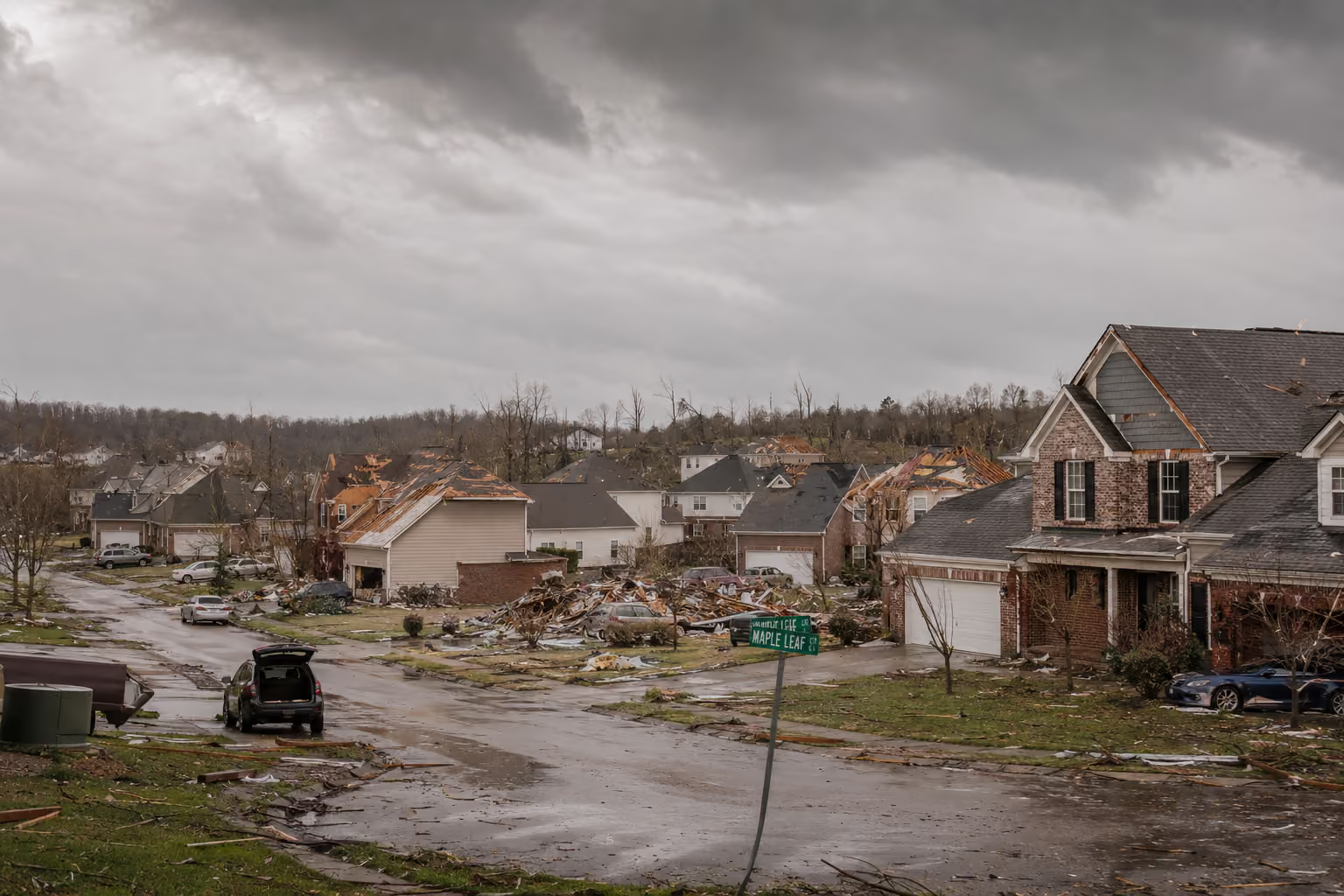
If you've ever seen tornado damage where one house is completely destroyed while the house next door appears almost untouched, you're not alone in wondering what happened.
At first glance, tornado damage often looks random.
In reality, tornadoes create highly complex wind fields that can change dramatically over very short distances. Wind speed, debris impact, terrain, building construction, storm movement, and even the angle at which a tornado strikes a structure can all influence how much damage occurs.
That is why one of the most common questions after a Tennessee tornado is:
"Why was that house destroyed while the neighboring house survived?"
The answer usually involves a combination of tornado damage patterns, structural vulnerability, and the unpredictable nature of rotating storm systems.
Understanding why tornado damage looks random helps homeowners better understand severe weather risk and why shelter planning matters long before a warning is issued.
Why One House Is Destroyed and Another Survives
While tornado damage can appear random, meteorologists often find clear explanations when they examine the damage path closely.
Several factors influence how damage occurs:
- changes in wind speed
- tornado size and shape
- debris impact
- building construction quality
- roof attachment strength
- terrain features
- direction of storm movement
- angle of impact
A tornado does not produce identical winds across its entire width.
Some portions of the circulation may produce significantly stronger winds than others.
This means two homes separated by only a short distance may experience very different conditions.
The result can appear random even when there is a meteorological explanation.
What Damage Patterns Reveal About Risk
One of the biggest lessons from Tennessee tornado events is that visible damage does not always tell the full story.
Many homeowners assume:
- "My neighborhood has never been hit."
- "The storm will probably miss us."
- "Damage only happens in certain areas."
Unfortunately, tornadoes do not follow those assumptions.
A tornado can produce devastating damage on one street while leaving another street relatively intact.
That uncertainty is one reason severe weather planning matters.
Homeowners can monitor severe weather conditions through Storm Mode and stay informed when dangerous weather develops.
The goal is not predicting exactly which structure will be impacted.
The goal is preparing before that uncertainty becomes a life-safety issue.
Common Tornado Damage Patterns
Wind Speeds Change Across the Tornado
Many people imagine a tornado as a single rotating column with uniform winds.
In reality, tornadoes often contain multiple areas of varying intensity.
Within the same tornado:
- one area may contain extreme winds
- another area may contain weaker circulation
- wind direction may shift rapidly
- debris concentration may vary
A home struck by the strongest portion of the circulation may suffer catastrophic damage while another home nearby experiences much less.
This is one reason random tornado damage is commonly observed after severe weather events.

Debris Often Causes the Worst Damage
Tornado winds are dangerous.
Flying debris can be even more destructive.
A piece of lumber, metal roofing, fencing, or other debris can become a high-speed projectile.
One home may experience direct debris impacts while another nearby structure does not.
This can dramatically change damage outcomes.
In many cases, debris causes damage that appears disproportionate compared to nearby structures.

Construction Quality Matters
Not every home is built exactly the same.
Small differences can create major differences in damage outcomes.
Factors include:
- roof attachment methods
- foundation connections
- framing techniques
- building age
- maintenance condition
- previous storm damage
Two homes may appear nearly identical from the street while having very different structural performance during severe weather.
This is one reason tornado damage patterns often seem confusing after major storms.
Terrain Can Influence Damage
Tennessee's landscape includes:
- hills
- valleys
- ridges
- wooded areas
- open farmland
Terrain does not stop tornadoes.
However, local terrain can influence how winds interact with structures and how debris moves through an area.
This can create noticeable differences in damage from one location to another.
What Homeowners Can Control
No homeowner can control a tornado.
Homeowners can control preparation.
That includes:
- monitoring weather alerts
- understanding local risk
- creating family emergency plans
- identifying shelter locations
- preparing before severe weather season
Families researching Tennessee tornado safety often discover that preparation matters far more than trying to predict exactly where damage will occur.
The reality is simple:
Tornadoes are unpredictable.
Preparedness does not have to be.
Why Shelter Planning Matters
When homeowners see tornado damage that appears random, the takeaway should not be fear.
The takeaway should be preparation.
No one can guarantee whether a tornado will strike a specific house.
That uncertainty is exactly why many Tennessee families evaluate shelter options before severe weather season arrives.
Homeowners exploring Tennessee storm shelters often begin their research after seeing damage patterns from a local storm event.
Many also compare concrete storm shelters because they want dedicated protection that does not depend on the performance of the home itself during severe weather.
The goal is not predicting which house will be damaged.
The goal is making sure your family has a protected location if severe weather strikes.
What Tennessee Families Should Do Next
Before the next severe weather season:
- review your emergency plan
- understand local tornado risk
- monitor severe weather forecasts
- identify your fastest shelter location
- make sure family members know where to go
- avoid relying solely on sirens
The safest time to prepare is before a tornado warning is issued.
Not after damage has already occurred.
Explore Storm Shelter Options Before Severe Weather Strikes
Learn about shelter solutions designed to help Tennessee families prepare for severe weather and tornado emergencies.