
Why Mississippi Has More Dangerous Tornadoes in Mississippi
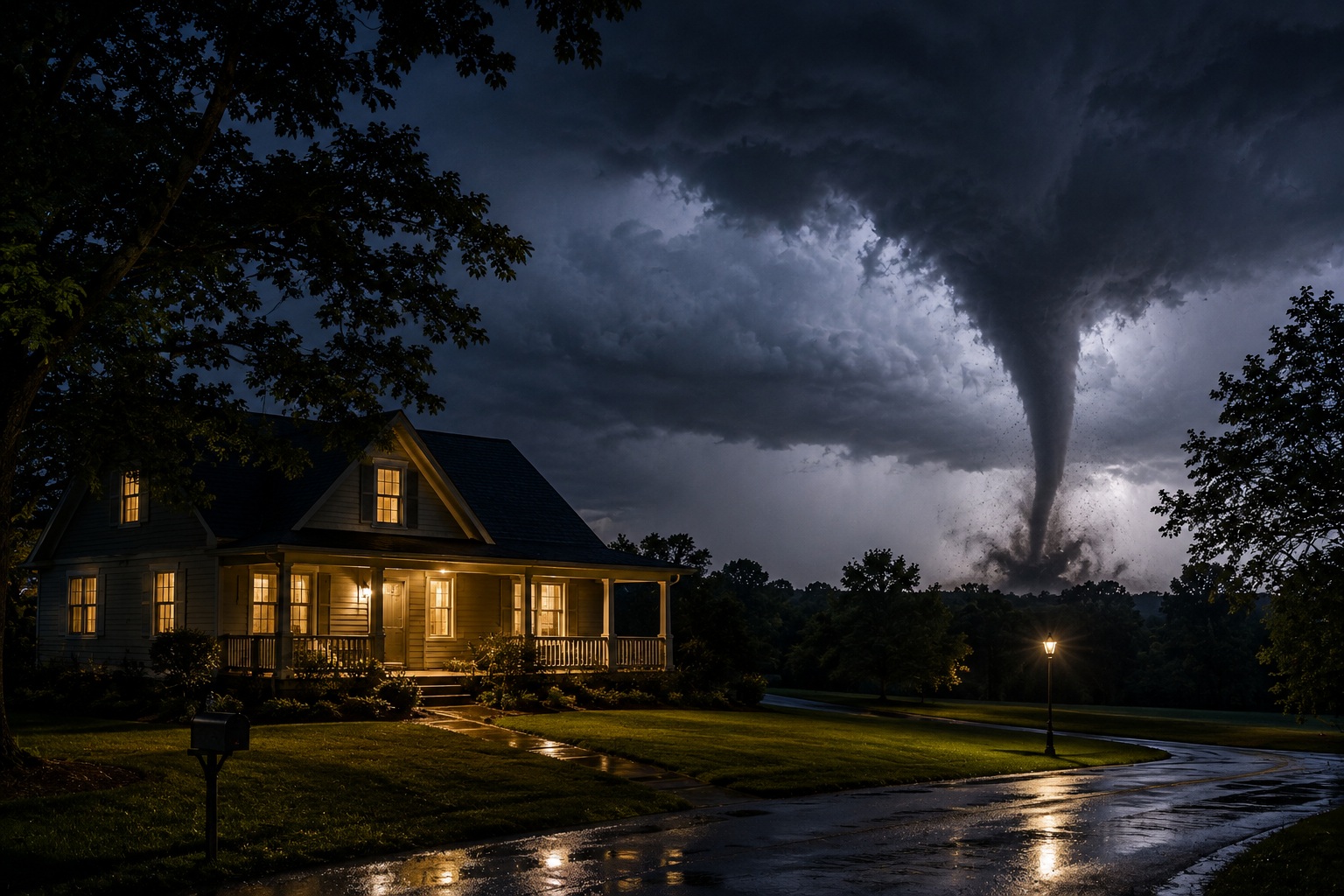
Mississippi sits inside what meteorologists often call Dixie Alley, a region where a specific mix of factors — more tornadoes forming after dark, dense tree cover that limits how far a storm can be seen coming, and homes that are, on average, less able to withstand a direct hit — combines to make tornadoes here more dangerous than the numbers alone suggest. It isn't that Mississippi simply gets more tornadoes. It's that the ones it gets tend to arrive with less warning and hit more vulnerable structures.
What Makes Dixie Alley Different from Tornado Alley
The term has been used for decades to describe a corridor running through Mississippi, Alabama, and parts of neighboring states where tornado behavior looks meaningfully different from the classic Great Plains pattern most people picture. The traditional image of a tornado is a storm crossing open, flat farmland in broad daylight — the Tornado Alley picture. The South doesn't work that way. Several factors set it apart:
- Nighttime tornadoes: The South sees a notably higher share of tornadoes after dark, when people are asleep and less likely to see a warning or react to it in time.
- Reduced visibility: Dense tree cover and rolling terrain across much of Mississippi mean a tornado can be much closer before it's actually visible, compared to open plains states.
- Housing vulnerability: Manufactured homes and older stick-built houses are common across parts of the state, and both are more susceptible to serious damage than newer, more storm-resistant construction.
- A longer season: Mississippi's tornado risk isn't confined to one tight spring window — the state can see a secondary rise in tornado activity later in the year, which keeps the season open longer than in many northern states.
- Warm, moisture-rich air: Proximity to the Gulf of Mexico keeps the region supplied with the humid air severe storms feed on for more months out of the year than areas farther north.
- Faster storm motion: Southern tornadoes often move across the ground more quickly than their Great Plains counterparts, which can shrink the time between a warning and the storm's arrival.
How Researchers Describe the Added Risk
Meteorologists and emergency-management researchers have spent years studying why tornadoes in this region create more risk than tornado counts alone would suggest. Nighttime timing, limited visibility from tree cover and terrain, and housing vulnerability show up consistently in that research as compounding factors — not because Mississippi tornadoes are inherently different storms, but because the conditions people experience them under are. A tornado that forms at 2 a.m. and approaches through a wooded, hilly area gives a household far less usable warning than the same storm crossing open ground at 4 p.m.
How This Plays Out Differently Across Mississippi
The state isn't uniform in how these factors show up. In the Delta, flatter and more open terrain gives residents a better shot at visually tracking an approaching storm than in the hill country farther east, where trees and rolling terrain do most of the work of hiding it until it's close. Along the Gulf Coast, tornadoes can also spin up out of landfalling tropical systems — a different setup than the classic severe-thunderstorm tornado, and one that often comes with even less lead time. None of this means one part of the state is "safer" than another in a meaningful sense — it just means the specific risk factors in play depend on where in Mississippi a property sits.
What This Means for Property Owners in Mississippi
When warnings come with less lead time — especially overnight — deciding where you'll go before severe weather is already better than figuring it out once a warning is issued. That's part of why real-time awareness matters as much as advance planning. Storm Mode is built for exactly that: keeping you aware of what's happening as severe weather develops, rather than relying on catching a warning after the fact.
Preparing Before Severe Weather Arrives
Understanding why tornadoes are more dangerous here is only useful if it changes how you prepare. For a full breakdown of what to do before, during, and after a tornado in Mississippi, see Mississippi tornado safety. The short version: know your safe location before a watch is issued, keep a way to receive alerts overnight, and don't wait on visual confirmation of a tornado to take shelter — in this part of the country, you may not get one.
A household communication plan matters more here too. If severe weather is likely to hit overnight, everyone in the home should already know where to go without needing to be walked through it half-asleep. That's a small amount of planning that matters most in exactly the conditions Dixie Alley tends to produce.
Choosing a Shelter Option for Your Property
For a lot of Mississippi homeowners, that overnight and low-visibility risk is exactly why an on-property shelter gets serious consideration instead of relying on getting to a safe room somewhere else in time. Waiting out a warning in a hallway or closet is better than nothing, but it wasn't built to withstand a direct hit — a dedicated shelter was. If you're ready to look at what fits your home, take a look at Mississippi storm shelters we support across the state, or go ahead and browse storm shelter options directly.
Why This Isn't About Fear — It's About Planning
None of this is meant to suggest the next tornado is guaranteed to be catastrophic, or that a shelter is the only responsible choice. It's meant to explain why the usual advice — watch the sky, wait for a warning, head to a safe room — doesn't hold up as well here as it does elsewhere. Planning around that reality, rather than assuming you'll get the same warning time and visibility as someone in the open plains, is the practical takeaway.
That planning looks different for every household. For some, it means confirming the safest interior room and making sure everyone knows where it is without discussion. For others — especially in manufactured housing or homes without a solid interior room to retreat to — it means looking at dedicated shelter options instead of relying on a closet or hallway that wasn't built to withstand a direct hit. Either way, the decision is easier to make in advance, in daylight, than it is at 2 a.m. with a warning already active.
View shelter options to compare what's available, or reach out if you'd like help figuring out what makes sense for your property.