
Underground Storm Shelter Benefits in Alabama
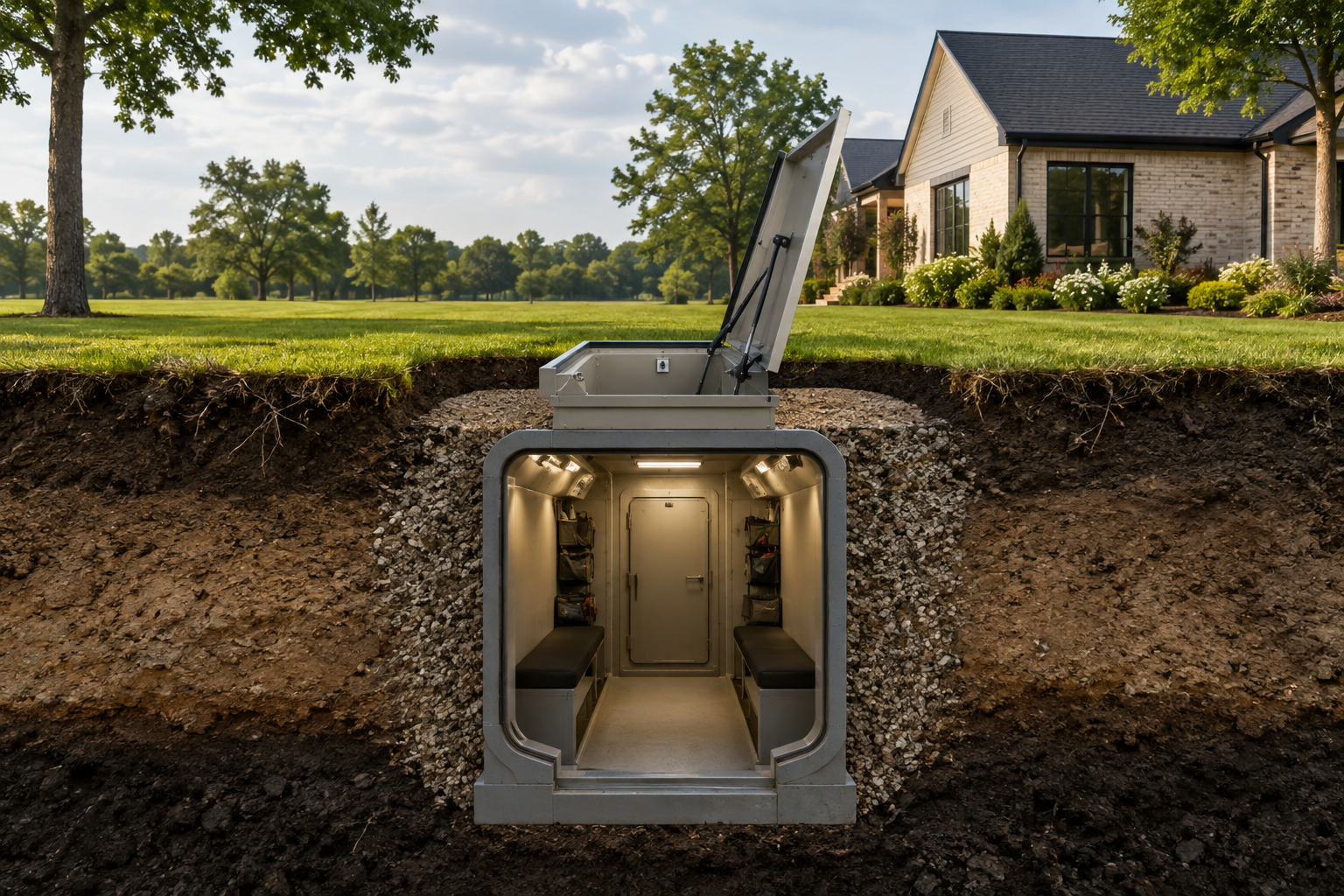
Underground storm shelters offer some of the most well-understood protection available, but whether one is the right fit for your Alabama property depends less on personal preference and more on what's happening beneath your yard — soil type, water table depth, and drainage. Get those right, and underground has real advantages. Get them wrong, and you're fighting your own property instead of getting the protection you paid for.
What Determines Whether Underground Works on Your Alabama Property
Alabama's ground isn't the same from one end of the state to the other. In North Alabama, the Tennessee Valley and the foothills of the Appalachians tend to bring rockier, harder-to-excavate soil, which can add complexity to a below-ground install. Through Central Alabama, including the Black Belt region, the soil is often heavier clay that holds water longer after rain, which matters for drainage planning. Closer to the Gulf and around Mobile Bay, the water table sits much higher, and sandier soil drains differently than clay further north. None of this rules underground out — it just means the right approach depends on where in Alabama your property actually sits.
Where Underground Storm Shelters Make the Most Sense
- Properties with reasonably good natural drainage and a water table deep enough that groundwater isn't a constant fight
- Homeowners who want the shelter fully out of the way above ground, with no visible structure taking up yard or garage space
- Properties with enough usable yard space to accommodate excavation without disrupting septic lines, wells, or established landscaping
- Households comfortable with stairs or a hatch entry, without mobility concerns that would make ground-level access the priority
Addressing the Most Common Hesitation: Being Cut Off After a Storm
One of the more common concerns homeowners raise about underground protection is what happens if the exit becomes blocked by debris after a storm passes. It's a fair question, and it's exactly the kind of property-specific detail worth confirming during the planning conversation — entry design and clearance around the access point matter as much as the shelter itself, and it's worth understanding how a specific model handles it rather than assuming every underground option is identical on this point.
What Living With an Underground Shelter Involves
Access typically comes through a hatch or short stairway leading down from ground level, usually placed somewhere convenient to reach quickly — often near the house or in an easily walkable part of the yard. Once installed, upkeep mostly comes down to periodically checking the entry point and surrounding grade for standing water after heavy rain, which matters in a state that sees its share of both spring storm systems and heavy summer rainfall. Keeping the area graded so water moves away from the shelter rather than pooling near it goes a long way toward keeping it dry and ready when you actually need it.
Where These Shelters Typically Go on an Alabama Property
Placement is usually driven by what your yard allows rather than a fixed rule. A backyard corner away from septic lines and wells is the most common spot, but a side yard near the driveway can work too if it offers easier access during a fast-moving storm. What matters most is a hatch location the household can reach quickly and a spot where water naturally drains away rather than pooling. This is one of the bigger differences from an above-ground concrete shelter, which can go inside a garage — underground generally needs open yard space with the entry visible at grade.
Timing Your Installation Around Alabama's Storm Season
Alabama's severe weather isn't limited to one tight spring window — the state can also see a secondary rise in activity later in the year. Because underground installation involves excavation and depends on ground conditions, scheduling before your soil gets saturated from the wettest stretch of the year can make the process more straightforward than trying to dig during a run of heavy rain. It's worth factoring that into when you request a quote, not just what you order.
What to Ask Before You Commit
- How close the water table sits during the wettest part of the year, not just on a dry day
- Whether your yard's natural drainage moves water away from or toward your preferred placement
- What's already running underground nearby — septic lines, wells, irrigation, or other utilities
- Delivery and equipment access to the placement area
What Installation Realities Look Like
Because the shelter goes into the ground rather than sitting on top of it, installation involves excavation, confirming there's nothing already running through that part of your property, and planning around the expected water table depth for your area. This is exactly why a site-specific look at your property matters more for underground than for shelter types that sit above grade — what works two counties over may not fit your yard's drainage the same way.
When an Above-Ground Concrete Shelter Might Make More Sense Instead
If your property sits somewhere with a high water table, heavy clay that holds standing water, or limited yard space free of septic lines and utilities, concrete storm shelters installed above ground are worth a look instead. They deliver similar durability without asking your yard to cooperate with an excavation. Neither option is universally better — it comes down to what your specific property can actually support.
Finding the Right Fit in Birmingham and Across Alabama
Whether you're in storm shelters in Birmingham or elsewhere in the state, the water table, soil, and drainage on your specific lot are what ultimately decide whether underground is the right call. Take a look at the full range of Alabama storm shelters we support, then Find the best fit so we can confirm what your property can accommodate.